
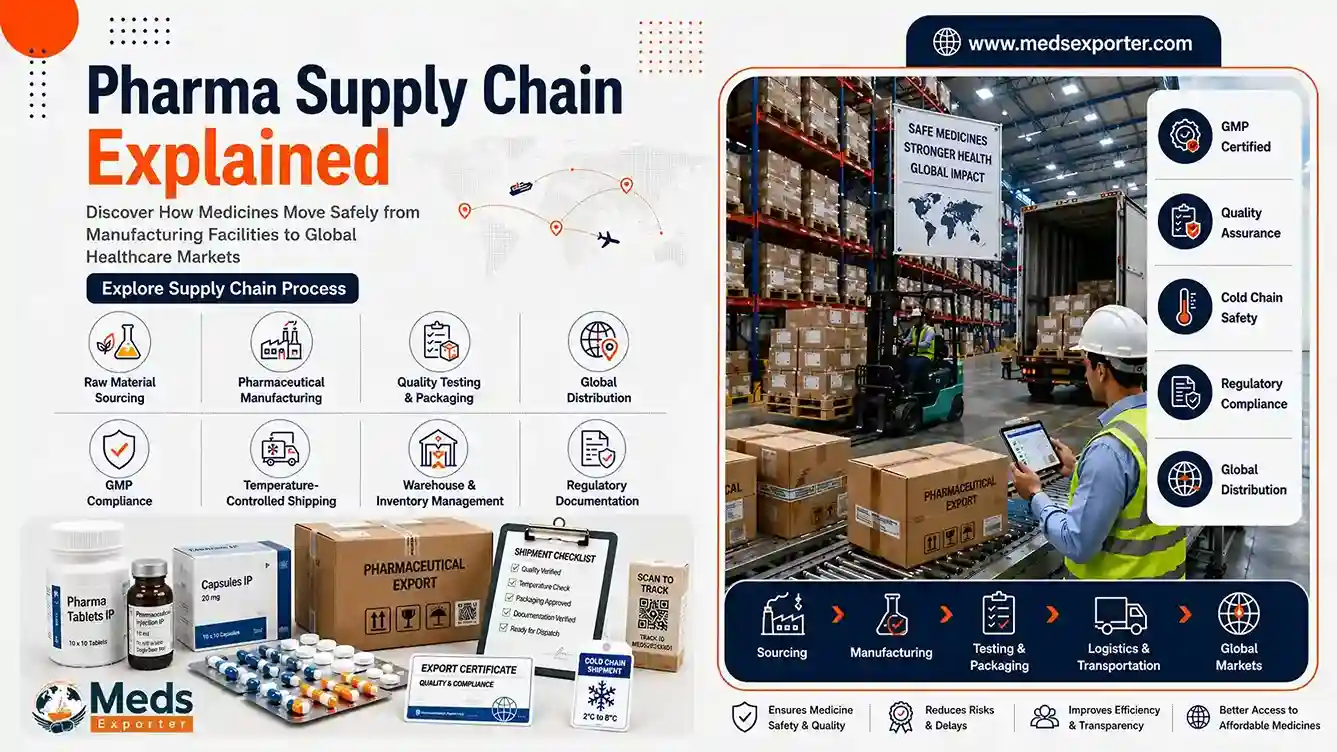
The pharma supply chain is a complex and critical network that involves the manufacturing, storage, and distribution of pharmaceutical products from raw materials to patients. Unlike other supply chains, the pharmaceutical supply chain demands high standards to ensure product quality, safety, and compliance with stringent regulatory requirements.
In this article, we will explore various aspects of the pharma supply chain, including its stages, challenges, and strategies for optimization to ensure timely delivery of life-saving medications worldwide.
What is the Pharma Supply Chain?
The pharma supply chain encompasses all the processes involved in producing and delivering pharmaceutical products. It starts from obtaining raw materials and ends with the delivery of finished products to healthcare providers and patients.
This supply chain is vital to healthcare systems as it directly affects patient outcomes by ensuring access to safe and effective medications.
Key Components of the Pharma Supply Chain
1. Raw Material Sourcing
The first stage involves sourcing active pharmaceutical ingredients (APIs) and excipients. Quality control at this stage is paramount because impurities in raw materials can compromise the safety and efficacy of drugs.
2. Manufacturing
Pharmaceutical manufacturing includes formulation, blending, granulation, tableting, and packaging. The process must comply with Good Manufacturing Practices (GMP) to prevent contamination and ensure product integrity.
3. Quality Control and Testing
Every batch of drugs undergoes rigorous testing for potency, purity, and stability. This step is crucial for regulatory approval and maintaining consumer trust.
4. Warehousing and Storage
Storage conditions such as temperature, humidity, and light exposure must be strictly controlled. Many pharmaceutical products require cold chain management to maintain their efficacy.
5. Distribution and Logistics
Products are transported via air, sea, or land depending on destination and urgency. Efficient logistics ensure timely delivery to wholesalers, pharmacies, hospitals, and ultimately patients.
Types of Pharma Supply Chains
- Traditional Supply Chain: Involves multiple intermediaries, including manufacturers, distributors, wholesalers, and pharmacies.
- Direct-to-Pharmacy Supply Chain: Manufacturers deliver directly to pharmacies, eliminating some intermediaries for a faster turnaround.
- Cold Chain Supply Chain: Specialized for temperature-sensitive products like vaccines and biologics, requiring strict temperature control.
Challenges in Pharma Supply Chain
1. Regulatory Compliance
Pharmaceutical companies must comply with different regulations across countries, including FDA, EMA, and WHO guidelines, which can complicate distribution.
2. Counterfeit Drugs
The supply chain is vulnerable to counterfeit medicines, which pose severe health risks. Serialization and track-and-trace systems help combat this problem.
3. Complexity and Transparency
The global nature and multi-tiered structure of the supply chain can lead to a lack of visibility, making tracking and managing inventory difficult.
4. Cold Chain Management
Maintaining consistent temperature control during storage and transportation is critical but challenging, especially in developing regions with limited infrastructure.
5. Demand Forecasting
Accurately predicting demand is complicated by factors such as seasonal illnesses, pandemics, and new product launches.
Strategies for Optimizing Pharma Supply Chain
- Implementing Advanced Technology: Utilizing IoT, blockchain, and AI for real-time tracking, enhanced transparency, and predictive analytics.
- Strengthening Cold Chain Infrastructure: Investing in advanced refrigeration and monitoring systems to ensure temperature compliance.
- Regulatory Harmonization: Developing unified standards across regions to simplify compliance and streamline the supply chain.
- Risk Management: Establishing contingency plans and diversifying suppliers to mitigate disruptions.
- Automation: Incorporating robotics and automated warehouse management for efficiency and accuracy.
Importance of Pharma Supply Chain in Healthcare
An efficient pharma supply chain ensures that patients receive medications safely and on time, which is critical for treatment success and patient well-being. It supports public health initiatives by providing access to vaccines and essential medicines during outbreaks and emergencies.
In addition, a well-managed supply chain reduces wastage, lowers costs, and enhances overall healthcare sustainability.
Future Trends in Pharma Supply Chain
- Digitalization and Data Analytics: Increasing use of blockchain, AI, and big data for end-to-end visibility and smarter decision-making.
- Personalized Medicine Supply Chains: Tailoring supply chains for individualized therapies such as gene and cell treatments.
- Green Logistics: Adoption of eco-friendly practices to reduce environmental impact.
- Integration of 3D Printing: On-demand manufacturing to reduce inventory and improve responsiveness.
FAQs
What makes the pharma supply chain different from other supply chains?
The pharma supply chain requires strict adherence to regulatory standards, temperature control, and product integrity to ensure drug safety and efficacy, which is unlike most other supply chains.
How is counterfeit medication prevented in the pharma supply chain?
Using serialization, barcoding, and blockchain technology helps track each product batch, minimizing the risk of counterfeit medicines entering the supply chain.
Why is cold chain management important?
Many pharmaceutical products like vaccines and biologics are temperature-sensitive; improper storage can degrade their efficacy and safety.
How can technology improve the pharma supply chain?
Technologies like AI, IoT, blockchain, and automation increase transparency, accuracy, and efficiency, helping to predict demand and prevent disruptions.
What are the main challenges in pharma supply chain management?
Key challenges include regulatory complexities, risk of counterfeit drugs, maintaining cold chain integrity, demand forecasting, and lack of end-to-end visibility.