
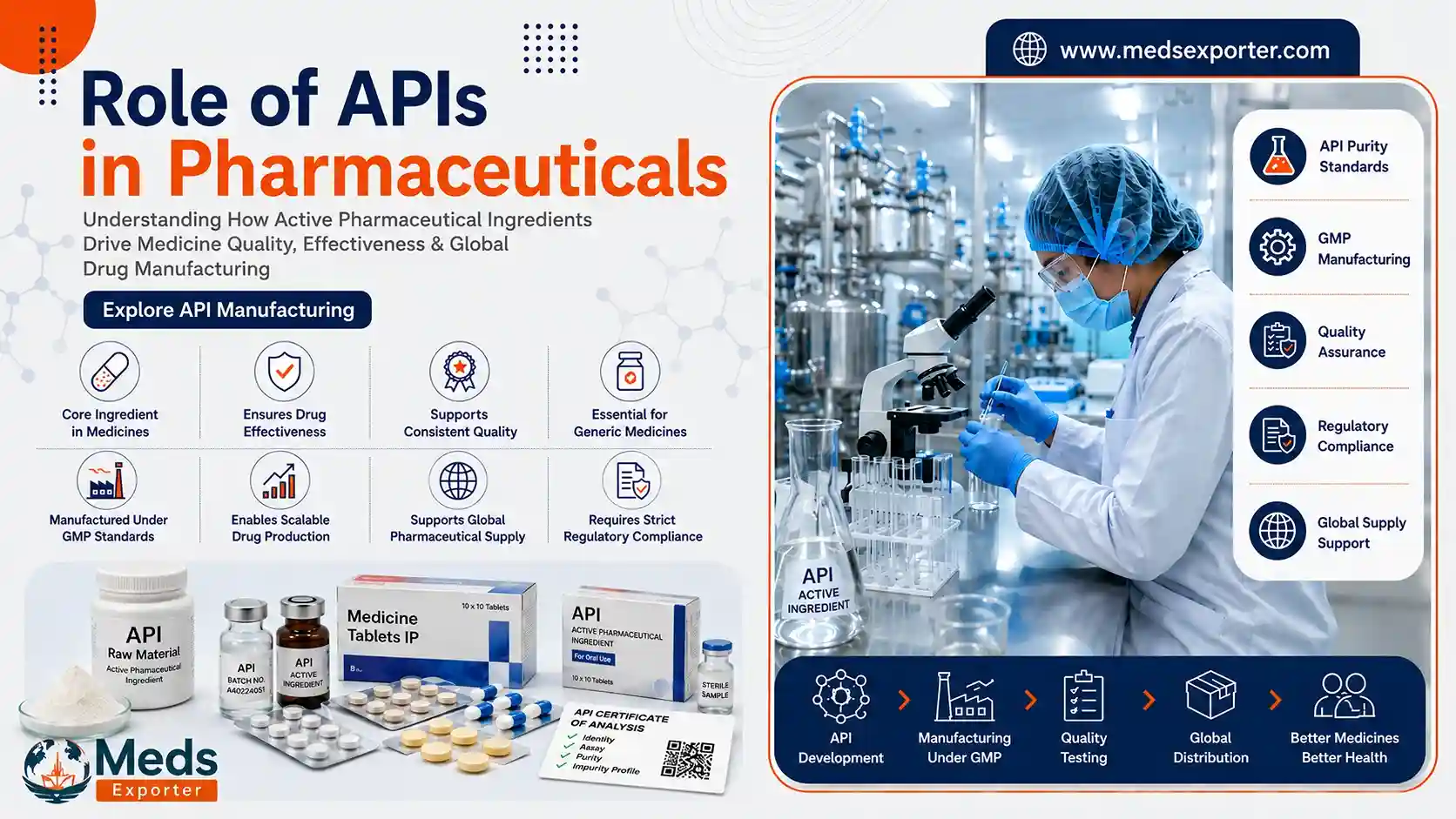
APIs, or Active Pharma Ingredients, are fundamental components in the pharmaceutical industry, driving the effectiveness and quality of medications. These substances are the biologically active part of drugs that provide therapeutic benefits to patients. Understanding the role of Active Pharma Ingredients in pharmaceuticals is crucial for anyone interested in drug manufacturing, research, and healthcare.
What Are Active Pharma Ingredients?
Active Pharma Ingredients (APIs) are chemical compounds or biological substances that produce the intended effects of a drug. They are combined with excipients and other substances to form the final pharmaceutical product, such as tablets, capsules, or injectables.
The quality and purity of Active Pharma Ingredients directly influence the safety, potency, and efficacy of medicines, making their manufacture and control a critical focus of pharmaceutical companies.
The Role of APIs in Drug Development
Active Pharma Ingredients play a pivotal role throughout the drug development lifecycle. Their importance can be understood in the following stages:
- Discovery and Synthesis: Identification of the API through chemical or biological synthesis begins the drug development process.
- Formulation: Active Pharma Ingredients are formulated with excipients to create the dosage form that delivers the active substance effectively.
- Clinical Trials: Active Pharma Ingredients must meet stringent purity and stability criteria to ensure safety during clinical studies.
- Regulatory Approval: Detailed information about the Active Pharma Ingredients characteristics, manufacturing process, and quality control is submitted for regulatory assessment.
Manufacturing Processes of APIs
The manufacturing of Active Pharma Ingredients involves complex chemical or biotechnological processes that require precision and adherence to strict guidelines to ensure product consistency and safety.
- Chemical Synthesis: Traditional method involving chemical reactions to produce the Active Pharma Ingredients molecule.
- Biotechnology: Use of living cells or organisms to produce biologically based Active Pharma Ingredients.
- Fermentation: A biotechnological method using microorganisms to generate desired Active Pharma Ingredients.
- Purification and Isolation: Eliminating impurities to achieve the required quality level.
Importance of Quality Control in APIs
Quality control (QC) is essential throughout the lifecycle of Active Pharma Ingredients to maintain efficacy and patient safety. This includes rigorous testing and validation processes to meet pharmacopeial standards such as USP, EP, or JP.
- Purity and Potency Testing: Ensures that the API contains the correct amount of active substance without harmful impurities.
- Stability Testing: Determines how Active Pharma Ingredients react under various environmental conditions.
- Compliance with Good Manufacturing Practices (GMP): Ensures consistent API quality during production.
Challenges in API Manufacturing
Despite technological advancements, the pharmaceutical industry faces several challenges in API production.
- Complexity of Synthesis: Many Active Pharma Ingredients have complicated molecular structures that require multi-step synthesis.
- Regulatory Hurdles: Varied requirements across countries increase complexity in production and approval.
- Supply Chain Disruptions: Dependence on raw materials and geopolitical factors can affect availability.
- Cost and Sustainability: Balancing cost-effectiveness while adopting environmentally sustainable methods.
Future Trends in API Development
The future of Active Pharma Ingredients in pharmaceuticals looks promising, with innovation focused on improving efficiency, sustainability, and personalized medicine.
- Green Chemistry: Development of eco-friendly synthetic methods that reduce waste and energy consumption.
- Continuous Manufacturing: Enhancing production efficiency and quality through continuous rather than batch processing.
- Biopharmaceuticals and Biosimilars: Growth in biologically derived Active Pharma Ingredients targeting complex diseases.
- Personalized APIs: Tailoring active ingredients to meet individual genetic profiles and treatment needs.
Conclusion
APIs are the cornerstone of pharmaceutical innovation, responsible for the therapeutic effect of medicines. Their quality, manufacturing, and continual improvement are vital to delivering safe and effective drugs worldwide. As the industry evolves, advanced technologies and regulatory frameworks will further optimize the role of APIs in healthcare.
FAQs
What is an API in pharmaceuticals?
An API or Active Pharma Ingredient is the substance in a drug product responsible for the intended pharmacological effect.
Why is quality important for active pharma ingredients?
Quality is vital because impurities or variability in the API can affect drug safety, efficacy, and patient outcomes.
How are Active Pharma Ingredients manufactured?
Active Pharma Ingredients are manufactured through chemical synthesis, biotechnological methods, fermentation, followed by purification processes under stringent quality standards.
What are the challenges in API production?
Key challenges include complex synthesis processes, regulatory compliance, supply chain issues, and achieving sustainability.
What trends are shaping the future of Active Pharma Ingredients?
Future trends include green chemistry, continuous manufacturing, biologics, biosimilars, and personalized medicine approaches.