
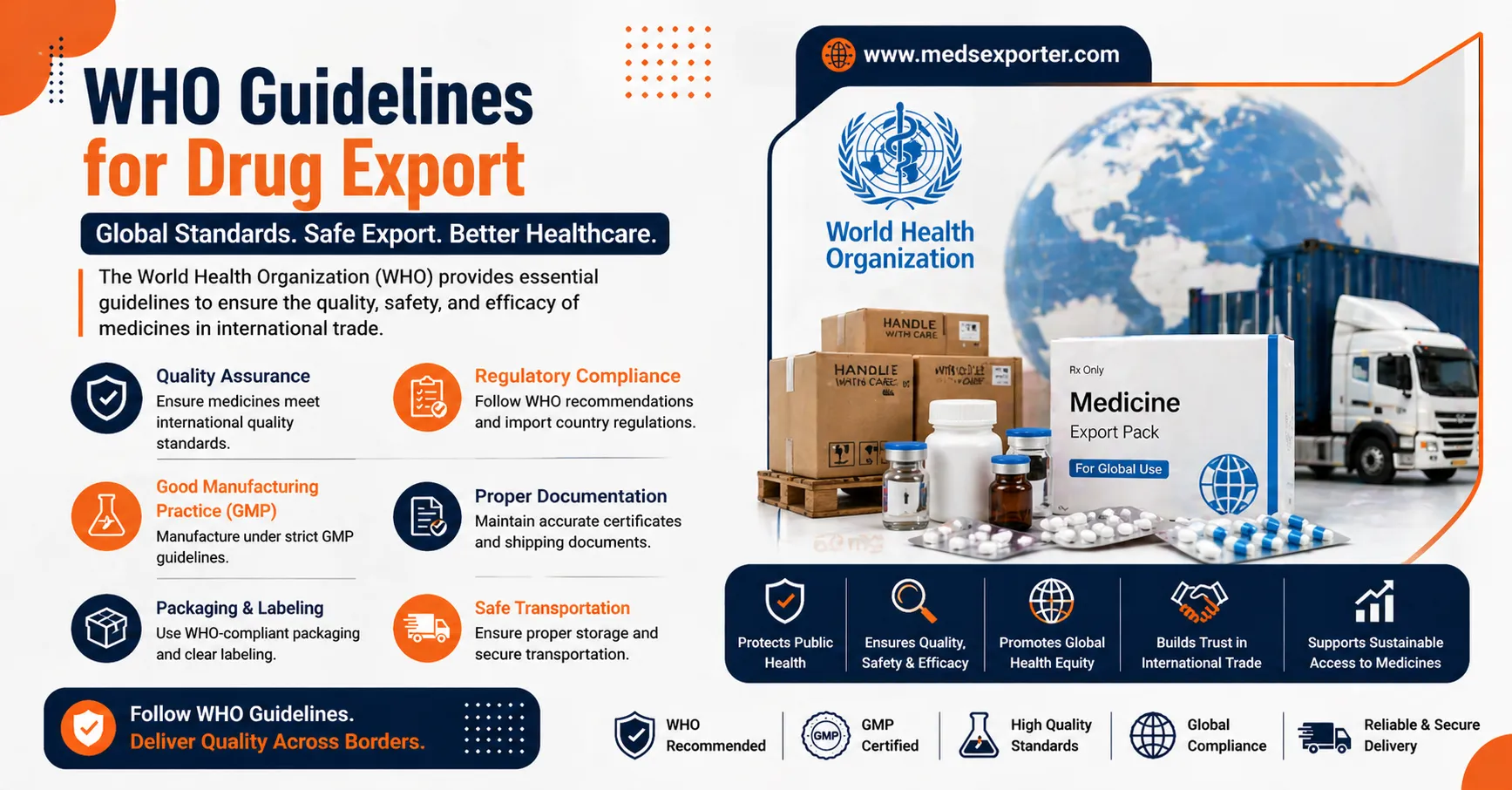
The World Health Organization (WHO) plays a crucial role in ensuring that medicines and pharmaceutical products exported globally meet strict safety and efficacy standards. Drug export guidelines established by the WHO aim to harmonize international regulations and promote public health through the safe distribution of drugs. Exporters, regulators, and pharmaceutical companies worldwide rely on these guidelines to maintain compliance and uphold quality.
Overview of WHO Drug Export Guidelines
WHO drug export guidelines focus on several critical aspects that must be adhered to for lawful and safe exportation of pharmaceutical products. These guidelines are designed to protect consumers internationally by ensuring that all exported drugs comply with stringent requirements regarding quality, labeling, packaging, and documentation.
Key Components of the WHO Guidelines for Drug Export
- Good Manufacturing Practices (GMP): Pharmaceutical exporters must follow WHO GMP standards, which include strict quality control and assurance throughout the manufacturing process.
- Quality Control and Testing: Batch testing must be conducted to verify the identity, purity, strength, and composition of drugs, thereby challenging counterfeit or substandard products.
- Proper Labelling Requirements: Labels must be clear, informative, and adhere to WHO recommendations, including active ingredients, dosage instructions, expiry dates, and storage conditions.
- Documentation: Exporters must provide comprehensive documentation such as Certificates of Analysis (CoA), export certificates, and prior regulatory approvals.
- Pharmacovigilance: Monitoring adverse drug reactions post-export to ensure ongoing safety and efficacy.
Importance of WHO Guidelines in Drug Export
Following the WHO drug export guidelines benefits exporters and importing countries by ensuring that pharmaceutical products are safe for human use and meet international quality standards. These guidelines facilitate trust between trading partners, reduce regulatory barriers, and prevent the entry of substandard or falsified medicines.
For exporters, adherence can enhance their reputation and expand access to global markets. For importing countries, it means protection of public health by minimizing risks associated with harmful or ineffective drugs.
Steps to Comply with WHO Drug Export Guidelines
Compliance with WHO guidelines requires a thorough and systematic approach:
- 1. Understand Regulatory Requirements: Exporters must stay informed about WHO guidelines as well as specific import country regulations.
- 2. Implement Quality Management Systems: Establish GMP protocols and quality assurance mechanisms.
- 3. Conduct Rigorous Testing: Use accredited laboratories for quality control tests on every shipment.
- 4. Prepare Accurate Documentation: Ensure all required certificates and regulatory paperwork are complete and accurately reflect product specifications.
- 5. Train Personnel: Regular training on current guidelines and regulations ensures adherence at every level of production and export.
- 6. Maintain Traceability: Keep shipment records and batch history for accountability and pharmacovigilance purposes.
Challenges in Following WHO Drug Export Guidelines
While the WHO drug export guidelines are essential for public health, exporters may face challenges such as:
- Complex Regulatory Variations: Different countries have varying additional requirements, which complicate the export process.
- Cost Implications: Implementing full WHO GMP standards and testing can be costly, especially for small manufacturers.
- Documentation Burden: Gathering and maintaining exhaustive documentation for multiple markets can be time-consuming.
- Quality Control Infrastructure: Not all exporters have access to the advanced quality control labs necessary for compliance.
Nonetheless, overcoming these challenges is critical to ensure successful and compliant exports.
WHO Prequalification Programme and Drug Export
The WHO Prequalification of Medicines Programme supports drug export by assessing the quality, safety, and efficacy of medicinal products. Manufacturers that gain WHO prequalification find it easier to export to countries that recognize WHO’s evaluation as a mark of quality. This program helps buyers worldwide identify products that meet international standards, facilitating smoother procurement and distribution.
Recent Updates to WHO Drug Export Guidelines
The WHO regularly updates its guidelines to adapt to new scientific developments and emerging risks. Notable recent updates include:
- Increased emphasis on combating substandard and falsified medicines in the global supply chain.
- Updated GMP requirements to incorporate advanced technological processes and digital record-keeping.
- Enhanced framework for pharmacovigilance expanding post-export monitoring requirements.
Conclusion
WHO drug export guidelines serve as an essential framework to ensure the global circulation of safe, effective, and high-quality pharmaceutical products. Compliance with these standards protects public health, facilitates international trade, and helps prevent the spread of counterfeit drugs. For exporters and regulators alike, staying updated with WHO guidelines and integrating them into practices is crucial for successful drug export operations.
FAQs
What are the main objectives of WHO drug export guidelines?
The primary objectives are to ensure exported drugs meet international quality and safety standards, prevent the distribution of counterfeit or substandard products, and harmonize regulations globally.
Do all countries require WHO certification for drug exports?
Not all countries require direct WHO certification, but many recognize WHO prequalification and guidelines as part of their regulatory approval process.
How can manufacturers obtain WHO prequalification?
Manufacturers must submit detailed product dossiers, demonstrate compliance with GMP, and undergo WHO inspections and evaluations to receive prequalification.
What role does pharmacovigilance play in drug exports?
Pharmacovigilance involves monitoring adverse effects of drugs after export to ensure continued safety and respond to any health risks promptly.
Are there penalties for non-compliance with WHO drug export guidelines?
Non-compliance can result in shipment rejection, legal penalties from importing countries, product recalls, and reputational damage.