
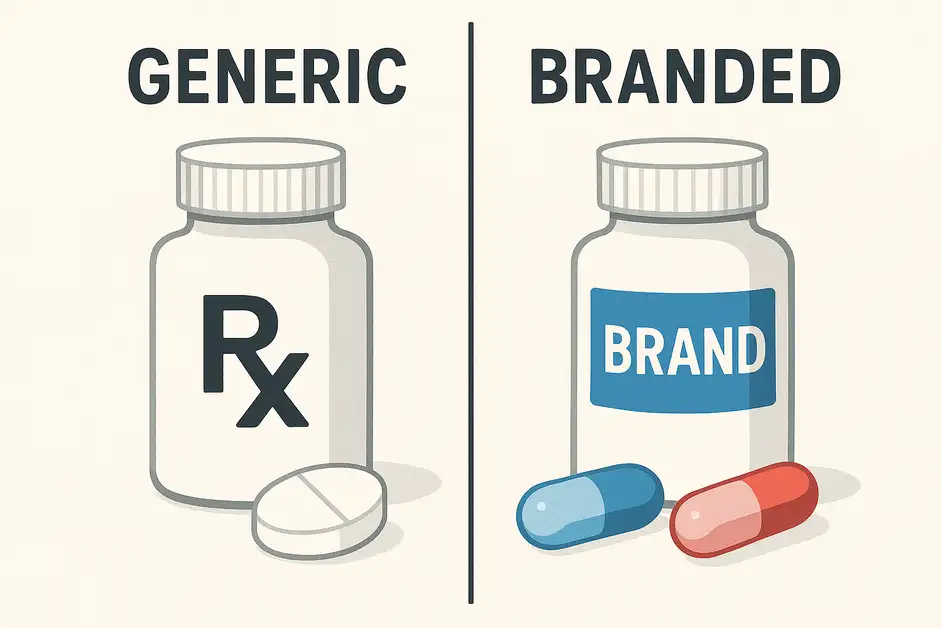
When it comes to buying medicines, many people wonder about the difference between generic vs branded drugs. Both types of medicines are widely used, but understanding how they differ can help you make better choices for your health and budget. In this article, we will explain the main differences, benefits, and considerations to keep in mind when choosing between generic and branded medicines.
What Are Branded Medicines?
Branded medicines are drugs that are sold under a specific brand name by a pharmaceutical company. These medicines are often the original version of the drug, developed and marketed by the company that discovered the active ingredient. Branded drugs usually come in distinct packaging and have trademarked names.
Pharmaceutical companies invest heavily in research, testing, and marketing to create branded medicines. Because of these costs, branded drugs tend to be more expensive than other types of medicines.
What Are Generic Medicines?
Generic medicines contain the same active ingredients as branded drugs and are designed to work in the same way. However, generic drugs are sold under their chemical name, not a brand name. They usually enter the market after the patent on the branded medicine has expired, allowing other companies to produce them.
Generic medicines must meet strict safety, effectiveness, and quality standards set by regulatory authorities such as the FDA or EMA before they are approved. These drugs often come at a much lower cost compared to branded options.
Key Differences Between Generic vs Branded Drugs
- Price: Generic medicines are typically much cheaper than branded drugs because manufacturers do not have the same research or marketing costs.
- Appearance: While the active ingredient is the same, generics may look different in color, shape, or size due to trademark restrictions on branding.
- Inactive Ingredients: Generic drugs may have different fillers or dyes, which usually do not affect how the medicine works.
- Patent Protection: Branded drugs are protected by patents, preventing others from making the same medicine until expiration.
- Availability: Generic drugs become available after the branded drug’s patent expires, helping increase accessibility.
Are Generic Medicines As Effective As Branded Ones?
Yes. Generic medicines are required to have the same active ingredients, dosage, strength, route of administration, and quality as branded drugs. Regulatory agencies thoroughly review generic drugs to ensure they perform similarly. This makes generic medicines just as effective and safe as their branded counterparts.
Benefits of Choosing Generic Medicines
- Cost Savings: Generics can save you a significant amount of money without compromising treatment quality.
- Wider Access: Lower prices mean more people can afford essential medicines.
- Same Therapeutic Effect: Generics offer the same benefits, helping maintain health outcomes.
- Quality Control: They comply with strict regulations, ensuring safety and effectiveness.
When Should You Choose Branded Drugs?
Although generic drugs suit most situations, there are cases when branded medicines may be preferred:
- If your doctor specifically prescribes a branded drug due to patient response or allergies to inactive ingredients.
- When a particular formulation or extended-release version is only available as a branded product.
- If you experience side effects or reduced effectiveness with a generic drug.
Common Misconceptions About Generic vs Branded Drugs
- Generics are less safe: This is false because generics must pass rigorous safety checks.
- Generics are lower quality: Generic medicines meet the same standards as branded ones.
- Generics take longer to work: Generics deliver medicine as quickly and effectively as branded drugs.
Conclusion
Understanding the differences between generic vs branded drugs helps you make better decisions about your medications. Both options are safe and effective, but generic medicines offer a more affordable alternative without compromising quality. Always consult your healthcare professional when considering switching medicines and choose the option that best fits your medical needs and budget. With the right information, you can confidently use generic drugs as a cost-effective choice while maintaining excellent health outcomes.
FAQs
Are generic medicines FDA-approved?
Yes, all generic medicines in the U.S. must be approved by the FDA, ensuring they meet strict standards for safety, potency, and quality.
Can I switch from branded to generic drugs?
In most cases, yes. Many patients safely switch to generic medicines, but it is important to check with your healthcare provider before making changes.
Do generic medicines contain the same amount of active ingredient as branded medicines?
Yes, the active ingredient in generic medicines is identical in strength and dose to the branded medicines.
Why are branded medicines more expensive?
Branded medicines cost more due to the expenses involved in research, development, marketing, and obtaining regulatory approval.
Can inactive ingredients in generics cause allergic reactions?
Rarely, some people may be sensitive to certain fillers or dyes used in generics. If you have allergies, discuss this with your doctor or pharmacist.