
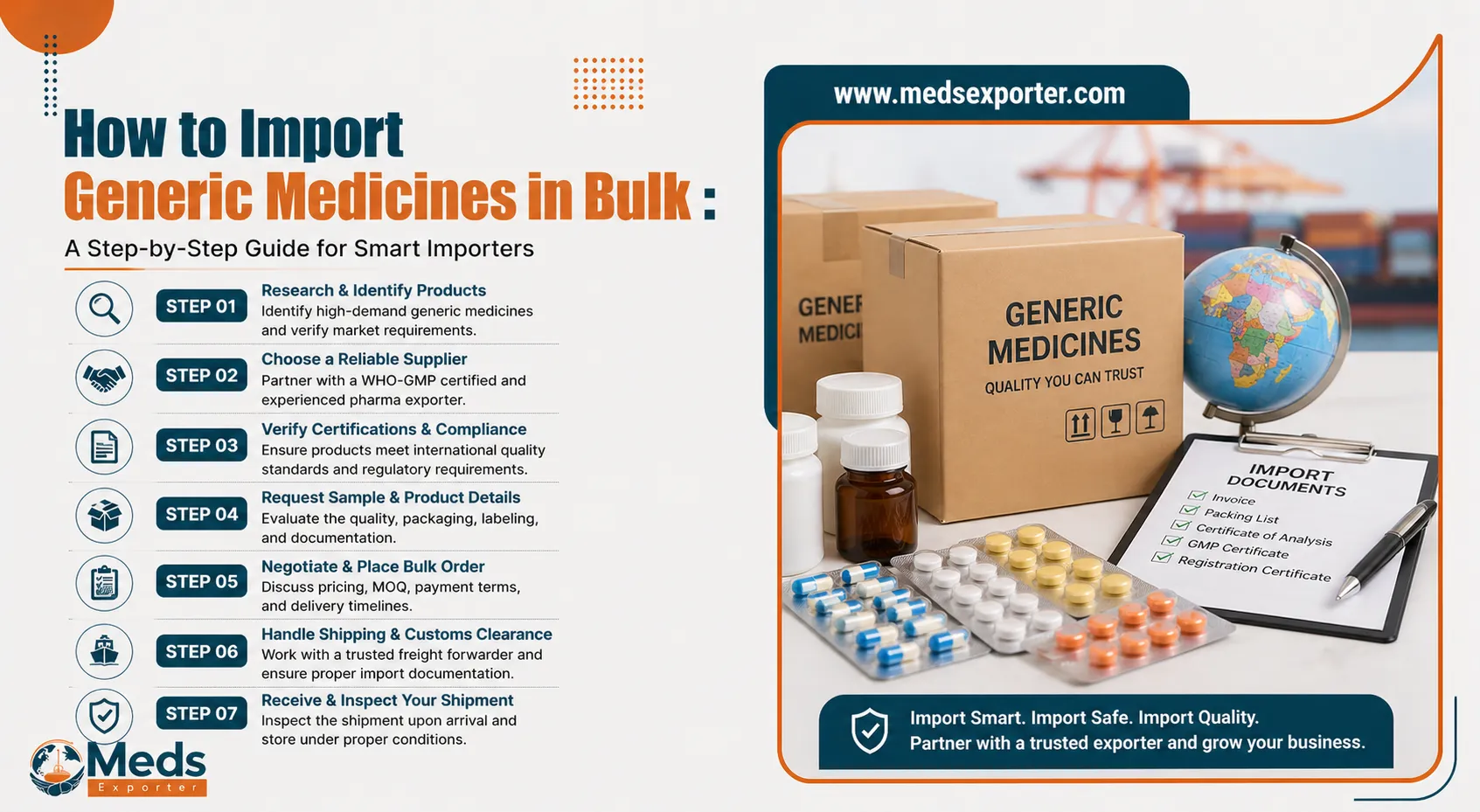
Importing generic medicines in bulk can be a profitable and essential business when done correctly. As the demand for affordable healthcare products grows worldwide, many businesses and pharmacies look to import generic medicines to meet this demand. This guide will walk you through the step-by-step process of how to import generic medicines effectively and legally while maximizing your success.
What Are Generic Medicines?
Generic medicines are pharmaceutical drugs that have the same active ingredients, dosage form, strength, and route of administration as brand-name drugs. However, they are typically sold at a lower price, making them an affordable option for many patients. Understanding the nature of these medicines is essential when you plan to import generic medicines in bulk.
Why Import Generic Medicines?
Importing generic medicines can offer several advantages, including:
- Lower costs compared to brand-name medicines
- Increased accessibility to essential drugs
- High demand in multiple markets
- Potential for long-term business growth
By importing generic medicines, you can help provide affordable healthcare alternatives to your customers and expand your business portfolio.
Step-by-Step Guide to Importing Generic Medicines in Bulk
1. Research the Market and Regulations
Before starting the import process, thoroughly research the market demand for generic medicines in your target area. Understand the types of medicines that are most sought after and ensure there is a steady demand. Additionally, study the regulations imposed by your country’s health authorities and import department. Some essential considerations include:
- Licensing and import permits are required to import medicines
- Compliance with health and safety standards
- Restrictions on specific active pharmaceutical ingredients (APIs)
- Proper documentation and labeling requirements
2. Find Reliable Suppliers or Manufacturers
Finding a reliable and certified manufacturer or supplier is crucial when you want to import generic medicines. Look for suppliers with a proven track record, good manufacturing practices (GMP) certification, and the ability to meet bulk order demands. Consider factors such as:
- Supplier reputation and reviews
- Price competitiveness and payment terms
- Quality assurance and product certifications
- Timely delivery capabilities
3. Obtain Necessary Import Licenses and Documentation
Importing generic medicines usually requires specific licenses and permits from government agencies such as the drug control department or customs office. Ensure you have all the necessary paperwork, including:
- Import license for pharmaceutical products
- Certificate of analysis (COA) from the supplier
- Product registration documents
- Invoice, packing list, and bill of lading
4. Understand Customs and Tariff Procedures
Clearance through customs is a vital step when importing any product in bulk. Familiarize yourself with the import tariffs, taxes, and any applicable duties for generic medicines. Hiring a customs broker or freight forwarder experienced in pharmaceutical imports can help streamline this process and avoid delays.
5. Ensure Proper Packaging and Labeling
Generic medicines must be packaged and labeled according to your country’s regulations and industry standards. Packaging should protect the medicines from damage and contamination and ensure product integrity during transit. Labels must include details like:
- Product name and dosage information
- Manufacturer and batch numbers
- Expiry dates
- Storage instructions and safety warnings
6. Arrange Secure and Efficient Shipping
Choose a reliable shipping method that ensures your medicines arrive safely and within the required time frame. Many generic medicines may require temperature-controlled storage during transport, so selecting an appropriate courier or logistics service specialized in pharmaceutical shipments is essential.
7. Quality Inspection and Compliance Checks
Once the shipment arrives, conduct a quality inspection to verify that the medicines meet the required standards and match the specifications. This step is critical to protect your customers and avoid potential legal issues. Consider working with a certified third-party laboratory for independent testing and verification.
8. Build Strong Relationships
Maintaining a good relationship with your suppliers, customs officials, and logistics partners can help simplify future imports and foster trust. Transparent communication and timely payments are keys to a successful and ongoing business relationship.
Tips to Succeed When You Import Generic Medicines
- Stay updated with changes in pharmaceutical regulations.
- Invest in training for your team on compliance and handling medicines.
- Use technology to track and manage inventory efficiently.
- Develop a marketing strategy to reach your target customers.
- Focus on sourcing medicines with WHO prequalification or approval.
Common Challenges When Importing Generic Medicines
- Complexities in regulatory compliance
- Delays in customs clearance
- Quality control concerns
- Fluctuating currency exchange rates
- Availability of trustworthy suppliers
Being aware of these challenges helps you prepare better and reduce risks when you import generic medicines in bulk.
Conclusion
Importing generic medicines in bulk requires careful planning, compliance with regulations, and choosing the right suppliers and logistics partners. By understanding the process and taking the necessary precautions, you can offer high-quality, affordable medicines to your customers and build a successful pharmaceutical import business. Always stay informed about the latest regulations.
FAQs
1. Do I need a special license to import generic medicines?
Yes, most countries require an import license specifically for pharmaceutical products. You must apply through your national drug control authority or ministry of health.
2. How can I verify the quality of generic medicines before importing?
Look for suppliers with proper certifications like GMP, request certificates of analysis, and consider third-party lab testing for additional assurance.
3. Are there restrictions on certain generic medicines for import?
Yes, some active ingredients may be controlled or restricted depending on your country’s drug control laws. Check with regulatory authorities before proceeding.
4. What is the best shipping method for bulk generic medicines?
Temperature-controlled air freight is often preferred for sensitive medicines, but sea freight may be cost-effective for larger, non-perishable shipments. Consult with logistics experts.
5. How long does the import process usually take?
The timeline varies depending on documentation, customs clearance, and shipping method but can range from a few weeks to a couple of months.