
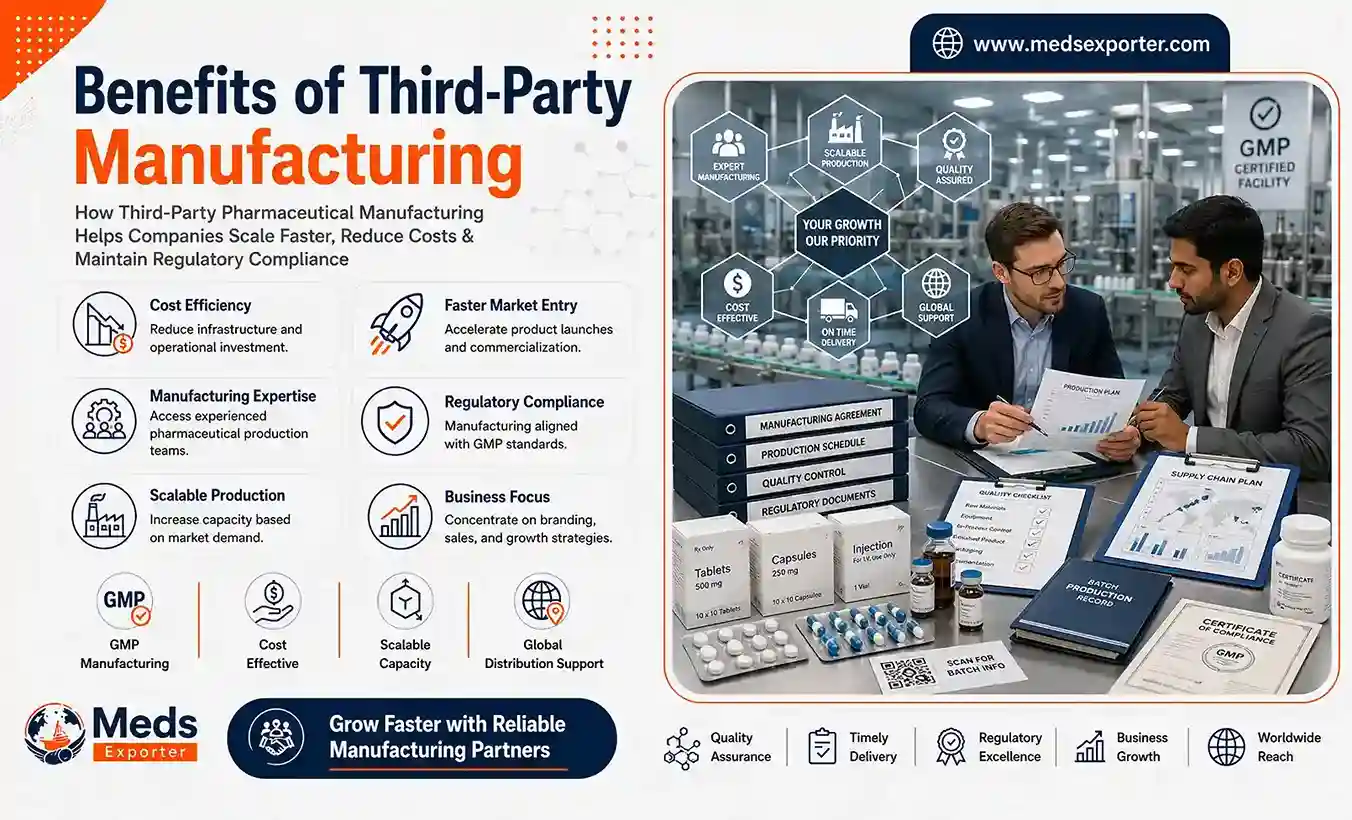
Third-party pharma manufacturing has become an essential strategy for pharmaceutical companies aiming to optimize their production processes, reduce costs, and gain faster market access. This manufacturing model involves outsourcing the production of pharmaceutical products to specialized third-party manufacturers who possess the necessary expertise, infrastructure, and regulatory compliance. In this detailed blog post, we will explore the numerous benefits of third-party pharma manufacturing and why more companies are choosing this approach to stay competitive in the industry.
What is Third Party Pharma Manufacturing?
Third party pharma manufacturing refers to the process where pharmaceutical companies contract external manufacturers to produce their drugs, formulations, or pharmaceutical ingredients on their behalf. These manufacturers are equipped with advanced technology and a skilled workforce and operate under stringent quality standards to ensure the final product meets all regulatory and safety requirements.
Outsourcing production to third parties allows pharma companies to focus on research, marketing, and sales, while benefiting from the manufacturing expertise of external partners.
Key Benefits of Third Party Pharma Manufacturing
1. Cost Efficiency
One of the primary benefits of third-party pharma manufacturing is cost reduction. Setting up and maintaining manufacturing facilities requires significant capital investment, including equipment, infrastructure, and workforce. By partnering with established manufacturers, pharmaceutical companies can save on these capital expenditures and operational costs.
Costs related to regulatory compliance, quality testing, and manufacturing waste management are also absorbed by the third-party manufacturer, providing additional savings. This allows pharma companies to allocate their budget toward research and development or marketing activities.
2. Access to Advanced Technology and Expertise
Third-party manufacturers are often equipped with state-of-the-art technology and have highly skilled personnel who specialize in pharmaceutical production. This expertise ensures that products are manufactured with precision, quality, and compliance.
Pharmaceutical companies that lack the resources to upgrade their manufacturing facilities can leverage the advanced capabilities of third-party partners to produce complex formulations and novel drug delivery systems effectively.
3. Enhanced Quality Assurance and Regulatory Compliance
Quality assurance is a critical aspect of pharmaceutical production. Third-party pharma manufacturing companies typically follow stringent Good Manufacturing Practices (GMP) and are certified by regulatory authorities such as the FDA, WHO, and EMA. This ensures that products meet high safety and efficacy standards.
By outsourcing production to compliant manufacturers, pharma companies mitigate the risk of regulatory issues and product recalls, safeguarding their brand reputation.
4. Faster Market Access
Time-to-market is crucial in the pharmaceutical industry, especially for drugs targeting critical health conditions. Third-party manufacturers have well-established production lines and supply chain networks that enable faster scale-up and distribution of products.
This speed can be a significant competitive advantage, allowing companies to launch new products more quickly and respond promptly to market demands.
5. Flexibility and Scalability
Third party manufacturing offers pharma companies the flexibility to scale production volumes up or down based on market demand without bearing the burden of underutilized resources. This scalability is particularly beneficial for companies launching new drugs or dealing with seasonal demand fluctuations.
Additionally, third-party manufacturing supports a wide range of dosage forms and packaging options, giving companies the flexibility to diversify their product portfolio.
6. Risk Mitigation
By outsourcing manufacturing, pharmaceutical companies can reduce risks associated with production delays, equipment failure, or workforce shortages. Third-party manufacturers typically have backup systems and multiple facilities to ensure continuous production even in unforeseen circumstances.
This risk mitigation helps maintain steady supply chains and prevents stockouts, which can be critical for patient care and regulatory compliance.
7. Focus on Core Competencies
Pharmaceutical companies can concentrate on their core competencies, such as drug discovery, clinical trials, and marketing by delegating manufacturing activities to specialized partners. This strategic focus often results in stronger innovation pipelines and improved business growth.
Outsourcing also enables companies to respond more agilely to changing industry trends and customer needs.
Conclusion
Third party pharma manufacturing offers a multitude of benefits for pharmaceutical companies seeking efficiency, quality, and competitiveness. From cost savings and access to advanced technology to flexibility and faster market access, outsourcing production can significantly enhance a company’s operational performance and market reach.
As the pharmaceutical landscape continues to evolve, partnering with reliable third-party manufacturers will remain a strategic choice for companies aiming to deliver high-quality products while optimizing resources and minimizing risks.
FAQ
What is third party pharma manufacturing?
It is the outsourcing of pharmaceutical production to specialized external manufacturers who produce drugs or formulations on behalf of pharma companies.
How does third party manufacturing reduce costs?
It eliminates the need for pharma companies to invest in manufacturing facilities, equipment, and workforce, while transferring regulatory and operational expenses to the third party.
Is product quality ensured in third party manufacturing?
Yes, reputable third-party manufacturers comply with Good Manufacturing Practices (GMP) and regulatory standards to maintain high-quality production.
Can third party manufacturing speed up time-to-market?
Absolutely, established manufacturers often have ready infrastructure and supply chain systems to accelerate production and distribution processes.
What types of products can be manufactured through third party pharma manufacturing?
A wide range, including tablets, capsules, syrups, ointments, injectables, and more, can be produced depending on the manufacturer’s capabilities.