
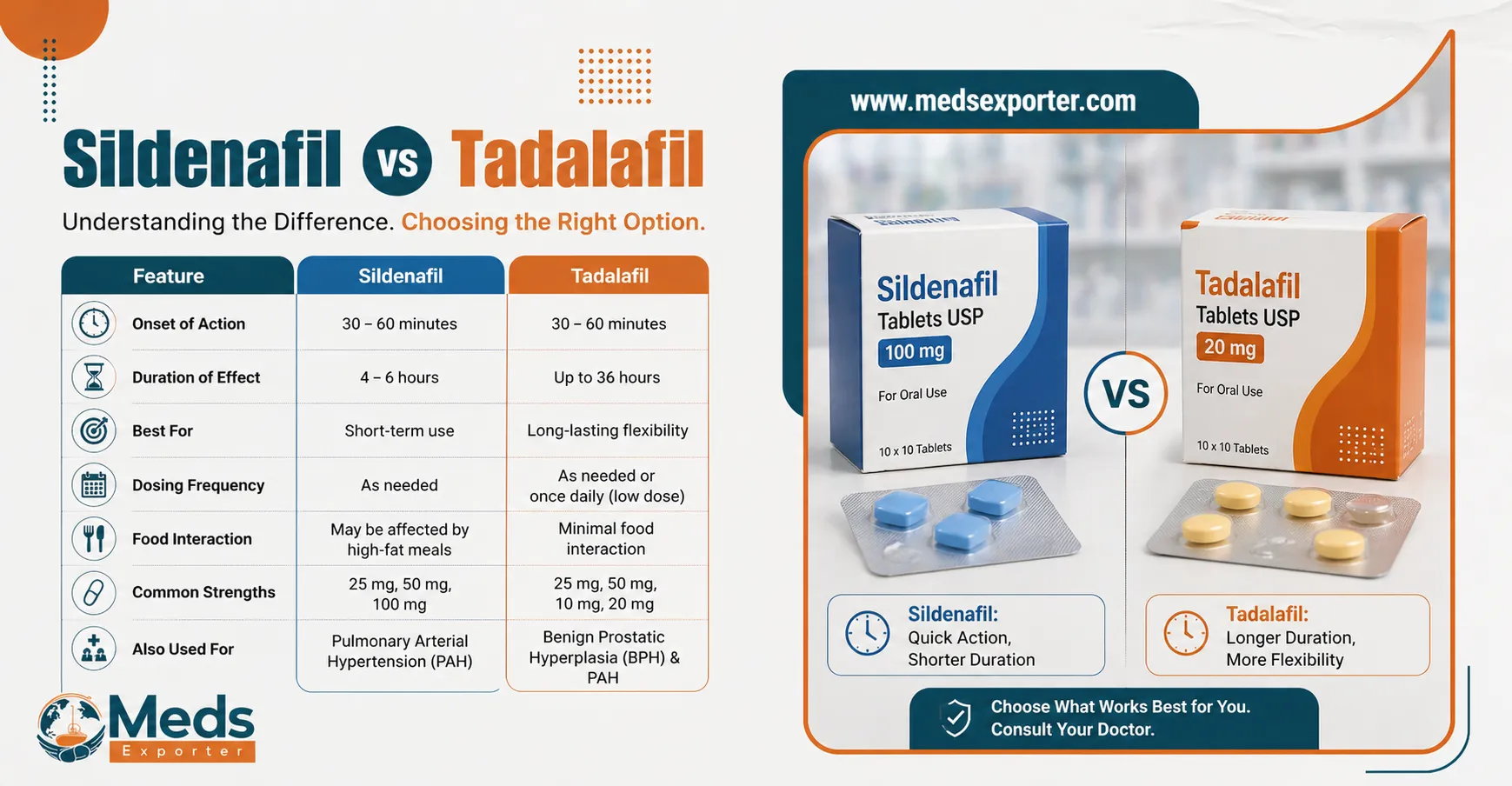
When it comes to treating erectile dysfunction (ED), two popular medications often come up in conversations and medical recommendations: Sildenafil and Tadalafil. Both medications belong to a class called phosphodiesterase type 5 (PDE5) inhibitors, but they have different characteristics that can affect how well they work for an individual. If you are trying to decide between sildenafil vs tadalafil, this article will help you understand their key differences, how they work, their side effects, and which one might be best suited for your needs.
What Are Sildenafil and Tadalafil?
Sildenafil and Tadalafil are prescription drugs commonly used to treat erectile dysfunction in men. Erectile dysfunction is the inability to get or maintain an erection sufficient for sexual activity. These medications work by increasing blood flow to the penis, helping to produce and maintain an erection when sexually stimulated.
Sildenafil is best known as the active ingredient in Viagra, while Tadalafil is commonly found in Cialis. Although both medications serve the same purpose, their onset, duration of action, and other factors can differ significantly.
How Do Sildenafil and Tadalafil Work?
Both sildenafil and tadalafil work by blocking the PDE5 enzyme, which leads to the relaxation of blood vessels in the penis. This relaxation allows more blood to flow into the penile tissue, facilitating an erection.
However, the way these medications act and their time frames vary:
- Sildenafil: Typically starts working within 30 to 60 minutes and lasts for about 4 to 6 hours.
- Tadalafil: Usually takes effect within 30 minutes but can last up to 36 hours, earning it the nickname “the weekend pill.”
Key Differences Between Sildenafil and Tadalafil
Understanding the differences between sildenafil vs tadalafil can help you choose the right medication for your lifestyle and health needs.
Onset of Action
Sildenafil generally takes effect faster and is often recommended when planning sexual activity shortly. It works well when taken about an hour before intimacy.
Tadalafil also works quickly but can remain effective for a longer period. This makes tadalafil a more flexible option for spontaneous sexual activity.
Duration
The most notable difference is how long the medications last:
- Sildenafil: Effective for 4 to 6 hours.
- Tadalafil: Effective for up to 36 hours.
Because of this, tadalafil offers a longer window for sexual activity without the need to time the pill as precisely as sildenafil.
Dosage Options
Sildenafil is usually taken as needed in doses of 25mg, 50mg, or 100mg before sexual activity. Tadalafil is available in lower daily doses (2.5mg or 5mg) for continuous use and higher doses (10mg or 20mg) for as-needed treatment.
This means tadalafil can be taken daily for men who anticipate frequent sexual activity, providing more flexibility.
Read More: Safe Dosage of Sildenafil
Side Effects
Both sildenafil and tadalafil have similar side effects associated with PDE5 inhibitors. Common side effects include:
- Headache
- Flushing (redness and warmth in the face)
- Indigestion or upset stomach
- Nasal congestion
- Muscle aches (more common with tadalafil)
- Back pain (more common with tadalafil)
Because tadalafil lasts longer, muscle aches and back pain might be more noticeable but usually resolve within a couple of days. Sildenafil tends to have more visual disturbances, like blurred vision or a blue tint, due to its short action time.
Food and Alcohol Interactions
Sildenafil should be taken on an empty stomach or after a light meal, as high-fat meals can delay its effectiveness. Moderate alcohol consumption is generally safe but excessive alcohol should be avoided to prevent increased side effects.
Tadalafil is less affected by food, meaning you can take it with or without meals. Alcohol consumption should also be moderate for tadalafil users.
Who Should Avoid Sildenafil or Tadalafil?
Neither medication is suitable for everyone. Men who take nitrates for chest pain or have severe heart or liver problems should avoid these drugs because of potentially dangerous interactions.
If you have a history of severe vision loss or certain genetic eye diseases, consult your doctor before using sildenafil or tadalafil.
Choosing Between Sildenafil vs Tadalafil
Your choice between sildenafil and tadalafil depends on several factors:
- Frequency of Sexual Activity: If you plan frequent sexual activity, tadalafil’s daily dosing option and longer duration may be more convenient.
- Planning and Spontaneity: Sildenafil is often preferred for planned sexual encounters, while tadalafil allows for more spontaneity.
- Side Effects: Consider which side effects you can tolerate better. For example, if muscle aches concern you, sildenafil may be preferable.
- Cost and Insurance Coverage: Prices can vary depending on location and insurance, so discuss this aspect with your healthcare provider.
Always consult your healthcare provider before starting or switching ED medications to ensure safety and appropriateness.
Frequently Asked Questions
Is one medication better than the other?
Neither sildenafil nor tadalafil is universally better. The best choice depends on your individual needs, lifestyle, and medical history. A healthcare professional will help you decide which is more suitable for you.
Can I take sildenafil or tadalafil with other medications?
You should inform your doctor about all medications you are on. Both can interact with certain drugs, especially nitrates or alpha-blockers, which can cause dangerous blood pressure drops.
How long before sexual activity should I take these medications?
Sildenafil is usually taken 30 to 60 minutes before sexual activity, while tadalafil can be effective if taken 30 minutes beforehand but allows for a longer window of effectiveness.
Are there any lifestyle changes that can improve ED alongside medication?
Yes, maintaining a healthy weight, exercising regularly, quitting smoking, reducing alcohol intake, and managing stress can all help improve erectile function.
Can I use these drugs if I have other health conditions?
If you have heart disease, diabetes, or other chronic conditions, talk to your doctor first. They can assess your situation and recommend the safest treatment plan.