
When a pharmaceutical buyer receives a shipment, the paperwork that matters most is usually the certificate of analysis. It is a summary of the quality control tests performed on that batch, and it only means something if the testing behind it was sound. Understanding what quality control (QC) involves helps importers, distributors, hospital procurement teams and tender buyers ask better questions and spot weak suppliers early.
This guide explains the main QC tests used in pharmaceutical manufacturing, where they happen in the production chain, how results are documented and what buyers should check before accepting a batch.
Quality Control vs Quality Assurance
The two terms are often confused. Quality control is the laboratory and sampling work that checks whether materials and products meet their specifications. Quality assurance (QA) is the wider system that makes sure the right procedures, records, training and approvals are in place. A well-run manufacturer needs both, and it should be able to show how QC data feeds into QA decisions such as batch release. Our own quality policy shows how these responsibilities can be described in practice.
QC is not a single test at the end of production. It runs through the whole process, from the first delivery of raw materials to the last check on packed goods. International guidance describes the expectations for laboratories in detail; the WHO good practices for quality control laboratories are one widely cited reference, though each national regulator sets its own requirements.
Where QC Testing Happens
1. Raw Materials and Packaging Components
Testing begins before manufacturing. Active pharmaceutical ingredients (APIs) and excipients are normally sampled and tested against their specifications before use. Typical checks include identification, assay or purity, appearance and, where relevant, limits on impurities or residual solvents. Packaging materials such as bottles, foils and cartons are also inspected so that printed information and material quality meet requirements.
2. In-Process Controls
During production, operators and QC staff check critical points. For tablets this may include blend uniformity, weight variation, hardness and thickness. For liquids it may include pH and fill volume, and for sterile products it may include checks on the filling environment. These controls allow a problem to be caught while a batch can still be corrected or stopped.
3. Finished Product Testing
Before release, each batch is tested against its approved specification. The exact list depends on the dosage form, but the table below shows common examples. It is a general overview, not a substitute for a product’s own specification.
| Test | What it checks | Typical dosage forms |
|---|---|---|
| Description / appearance | Colour, shape, markings and visible defects | All |
| Identification | Confirms the correct active ingredient is present | All |
| Assay | Amount of active ingredient compared with the label claim | All |
| Related substances | Impurities and degradation products | All |
| Dissolution | How the active ingredient is released over time | Tablets, capsules |
| Uniformity of dosage units | Consistency of content between units | Tablets, capsules |
| Microbial limits | Presence of unwanted microorganisms | Oral liquids, creams and other non-sterile forms |
| Sterility and endotoxins | Absence of viable organisms and pyrogens | Injectables |
| pH, viscosity, particulate matter | Physical and chemical characteristics of liquids | Liquids, injectables |
Common Analytical Methods
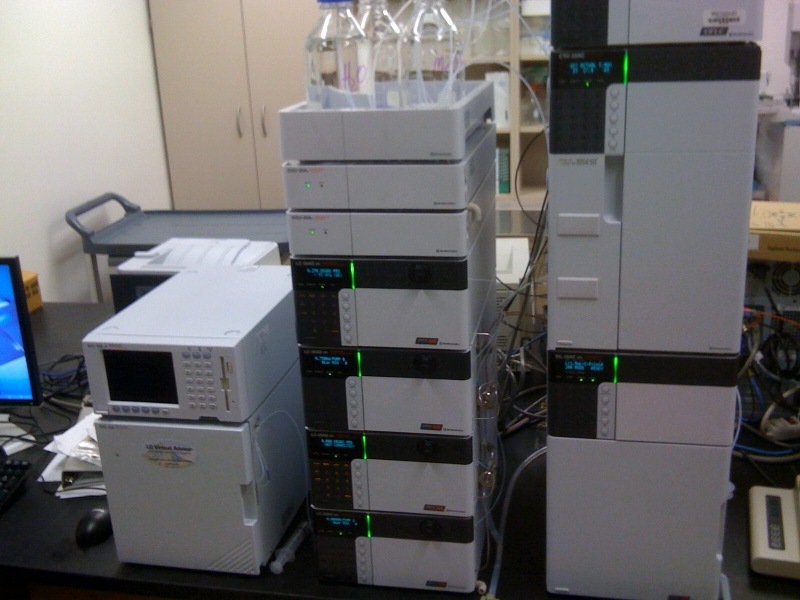
Laboratories use a range of instruments to carry out these tests. High-performance liquid chromatography (HPLC) is widely used for assay and impurity testing, while gas chromatography is common for residual solvents. UV spectroscopy supports identification and some assays, and dissolution apparatus measures drug release. Microbiology laboratories work in controlled areas to test for contamination. What matters to a buyer is not the brand of equipment but whether instruments are calibrated, methods are validated and analysts are trained.
Stability and Release Decisions
QC does not stop at release. Samples from marketed batches are usually placed on stability studies to confirm that the product stays within specification until the end of its shelf life, a topic covered in our guide to stability testing and shelf life. A batch is released only after the QC data have been reviewed and approved by an authorised person, and any out-of-specification result should trigger a documented investigation rather than a quiet retest.
How to Read a Certificate of Analysis
A certificate of analysis (CoA) should be specific to a batch and traceable to the product you ordered. Look for:
- Product name, strength, dosage form and batch number matching your order and the pack
- Manufacturing and expiry dates consistent with the labelled shelf life
- Each test listed with its specification (acceptance limit) and the actual result
- The reference standard, such as a pharmacopoeia or an in-house specification
- Name, signature or authorisation of the person who approved the release
- Manufacturer name and site address that match the licence and GMP certificate
Be cautious if results are always identical, if limits are missing or if the document looks edited. A CoA is evidence, but it should be checked against other documents, as described in our guide to verifying a pharmaceutical supplier.
GMP, Data Integrity and Local Rules
Reliable QC depends on good manufacturing practice. A WHO-GMP manufacturer is expected to keep complete, accurate and traceable laboratory records, which regulators describe as data integrity. In India, the revised standards covered in our article on Schedule M reinforce expectations for quality systems and testing. When comparing candidates, our guide to choosing a contract manufacturer suggests asking how batches are tested and released.
Importing authorities may also require their own testing or documentation, and some ask for samples at registration or for batch testing on arrival. Teams offering regulatory services can help you understand what a destination market expects. Prescription medicines are supplied only to licensed buyers such as importers, distributors and hospitals, and MedsExporter does not supply prescription medicines to private individuals.
Practical Questions for Your Supplier
- Which tests are done in-house and which are sent to an external laboratory?
- Are analytical methods validated and equipment calibrated on a schedule?
- How are out-of-specification results investigated and recorded?
- Are retention samples kept for each batch?
- Can you receive a sample CoA and specification before placing an order?
FAQs
Is a certificate of analysis enough to prove quality?
It is important evidence, but not proof by itself. Check it against the licence, GMP certificate and batch documents, and consider independent testing where your regulator or risk assessment calls for it.
What does out-of-specification mean?
It means a test result falls outside the approved acceptance limits. A proper investigation should find the cause before any decision on the batch is made.
Which pharmacopoeia should a product follow?
It depends on the destination market and the registration. Many regulators accept recognised pharmacopoeias, so confirm the requirement with your authority before ordering.
Can buyers request retention samples or extra testing?
Often yes. Agree this in the supply or quality agreement, including who pays and how results will be shared.
Conclusion
Quality control runs from raw material receipt to batch release and beyond. Buyers who understand the main tests, know how to read a certificate of analysis and ask about methods, records and investigations are better placed to choose dependable suppliers. To discuss quality documentation or supply options for your market, contact the MedsExporter team at [email protected].