
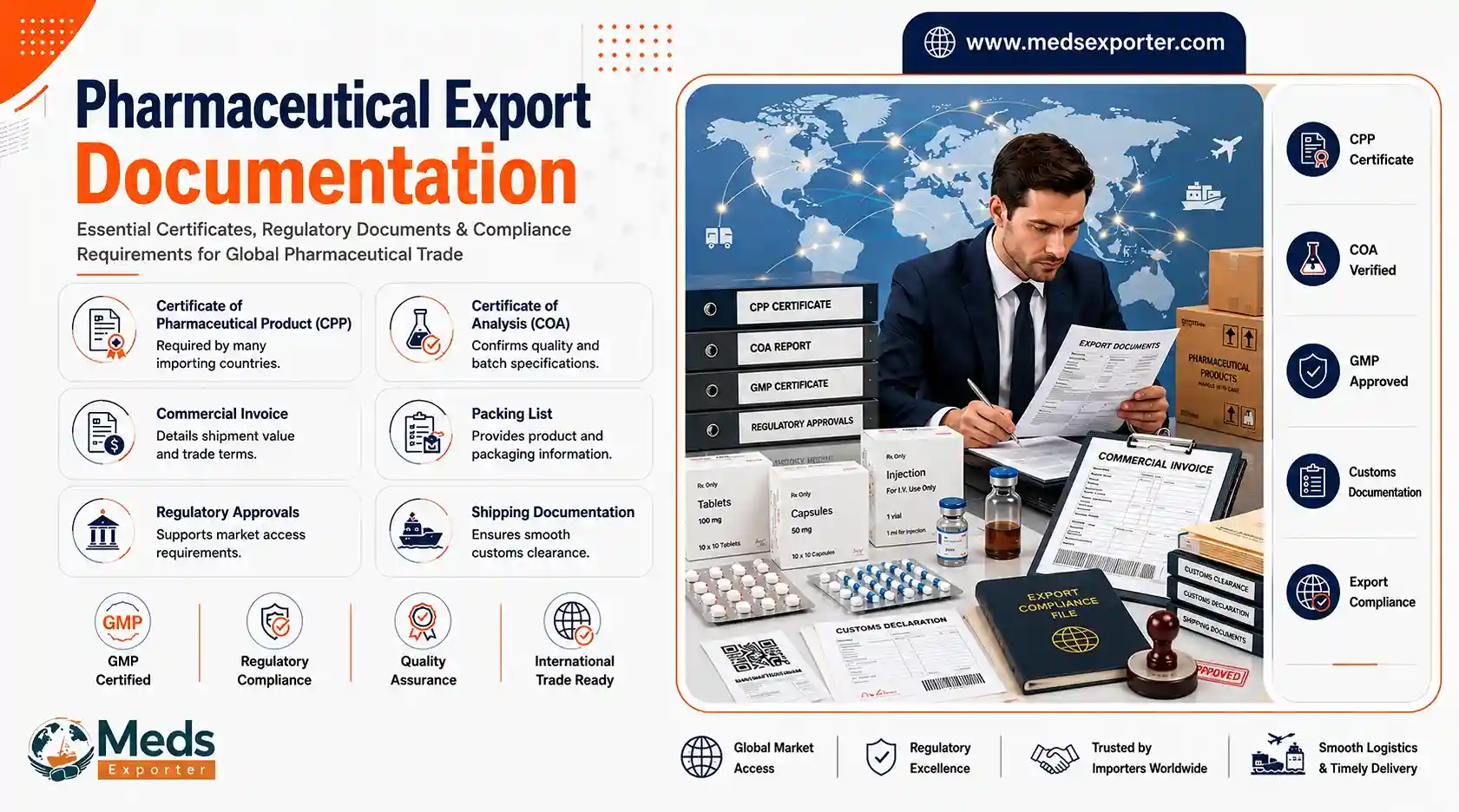
Exporting pharmaceutical products involves a stringent process that requires detailed documentation to ensure compliance with international regulations and quality standards. Pharma export documents play a vital role in facilitating smooth customs clearance, ensuring adherence to safety protocols, and verifying product authenticity. Understanding the necessary documentation helps companies avoid delays and penalties and ensures successful entry into global markets.
What Are Pharma Export Documents?
Pharma export documents are legal and regulatory documents required for exporting pharmaceutical products from one country to another. These documents verify the product’s safety, quality, and compliance with the importing country’s standards. They also provide critical information about shipment details, origin, and manufacturer credentials.
Importance of Pharma Export Documents
Having the correct pharma export documents is essential for several reasons:
- Regulatory Compliance: Ensures products meet the importing country’s pharmaceutical regulations and legal requirements.
- Customs Clearance: Provides customs authorities with the necessary details for smooth clearance without delays or additional inspections.
- Quality Assurance: Documents like certificates of analysis demonstrate that the product adheres to quality specifications.
- Traceability: Enables tracking of shipment origin, manufacturing process, and product batch details.
- Reducing Risks: Correct paperwork reduces the chances of shipment rejection, fines, and legal issues.
Key Pharma Export Documents
The following are the primary pharmaceutical export documents required by exporters and importers:
1. Commercial Invoice
The commercial invoice acts as a bill of sale between the exporter and importer. It details the description, quantity, unit price, and total value of pharmaceutical products.
2. Packing List
This document outlines the specifics of the shipment boxes, including weight, dimensions, packing method, and contents. It helps customs and logistics teams verify the shipment.
3. Certificate of Origin
The certificate confirms the country where the pharmaceutical product was manufactured or processed. Many countries require this document for preferential tariff treatments and product authenticity.
4. Export License
Depending on the product and destination country, an export license may be mandatory. This document is issued by the relevant authorities, allowing the export of pharmaceutical goods.
5. Certificate of Analysis (CoA)
The CoA certifies that the pharmaceutical product meets the required specifications and quality standards. It is vital for confirming that the drugs are safe and efficacious.
6. Good Manufacturing Practice (GMP) Certificate
A GMP certificate proves that the manufacturing facility complies with good manufacturing practices, ensuring products are consistently produced and controlled according to quality standards.
7. Free Sale Certificate
This certificate indicates that the pharmaceutical product is freely sold and legally available in the exporter’s domestic market, serving as proof of legitimacy.
8. Bill of Lading or Airway Bill
This transport document acts as a contract between the shipper and carrier, showing details about the shipment, route, and consignee for shipment tracking and receipt confirmation.
9. Import Permits
Some countries require import permits issued to the importer, confirming authorization to bring pharmaceutical products into their territory.
Compliance and Regulatory Considerations
Pharmaceutical exports are strictly regulated worldwide due to their sensitive nature. Exporters must stay updated with regulations such as the International Council for Harmonisation (ICH) guidelines, World Health Organization (WHO) standards, and local laws in the importing countries. Documentation should be precise and verified to avoid quarantine or rejection at borders.
Electronic Documentation and Digitalization
With advancements in technology, many companies are moving towards electronic pharma export documents. Electronic submissions reduce processing time, minimize errors, and improve transparency between exporters, customs, and regulators.
Tips for Streamlining Pharma Export Documentation
- Early Preparation: Start compiling your documents well before shipment to avoid last-minute errors and delays.
- Use Checklists: Maintain a comprehensive checklist tailored to specific country requirements and product type.
- Partner with Experts: Work with experienced freight forwarders, customs brokers, and regulatory consultants familiar with pharma exports.
- Ensure Document Accuracy: Double-check quantities, batch numbers, and compliance certifications to prevent discrepancies.
- Keep Updated on Regulations: Regularly review changes in export-import rules from both exporting and importing countries.
- Maintain Copies: Retain copies of all relevant documentation for record-keeping and future reference.
Conclusion
Pharmaceutical export documentation is a critical aspect of the pharma industry’s international trade. Proper preparation and understanding of essential pharma export documents streamline the shipping process, ensure regulatory compliance, and safeguard product integrity. Exporters who prioritize accurate documentation are better positioned to establish trust in global markets and expand their international footprint successfully.
FAQs
What are the must-have documents for pharmaceutical exports?
The must-have pharma export documents commonly include the commercial invoice, packing list, certificate of origin, certificate of analysis, GMP certificate, and export license.
How can I obtain a Certificate of Analysis for pharmaceuticals?
The Certificate of Analysis is usually issued by the manufacturer’s quality control department after testing the product batch for compliance with specified standards.
Is a Good Manufacturing Practice (GMP) certificate mandatory for pharma exports?
While it depends on the importing country’s regulations, a GMP certificate is often required to prove product quality and manufacturing compliance.
Can documentation errors cause shipment delays?
Yes, inaccurate or incomplete pharma export documents can lead to customs holds, inspections, or shipment rejections, causing significant delays.
Are electronic pharma export documents accepted internationally?
Many countries and regulators accept electronic documents, but it is important to confirm acceptance with the specific customs authority or trade partner involved.