
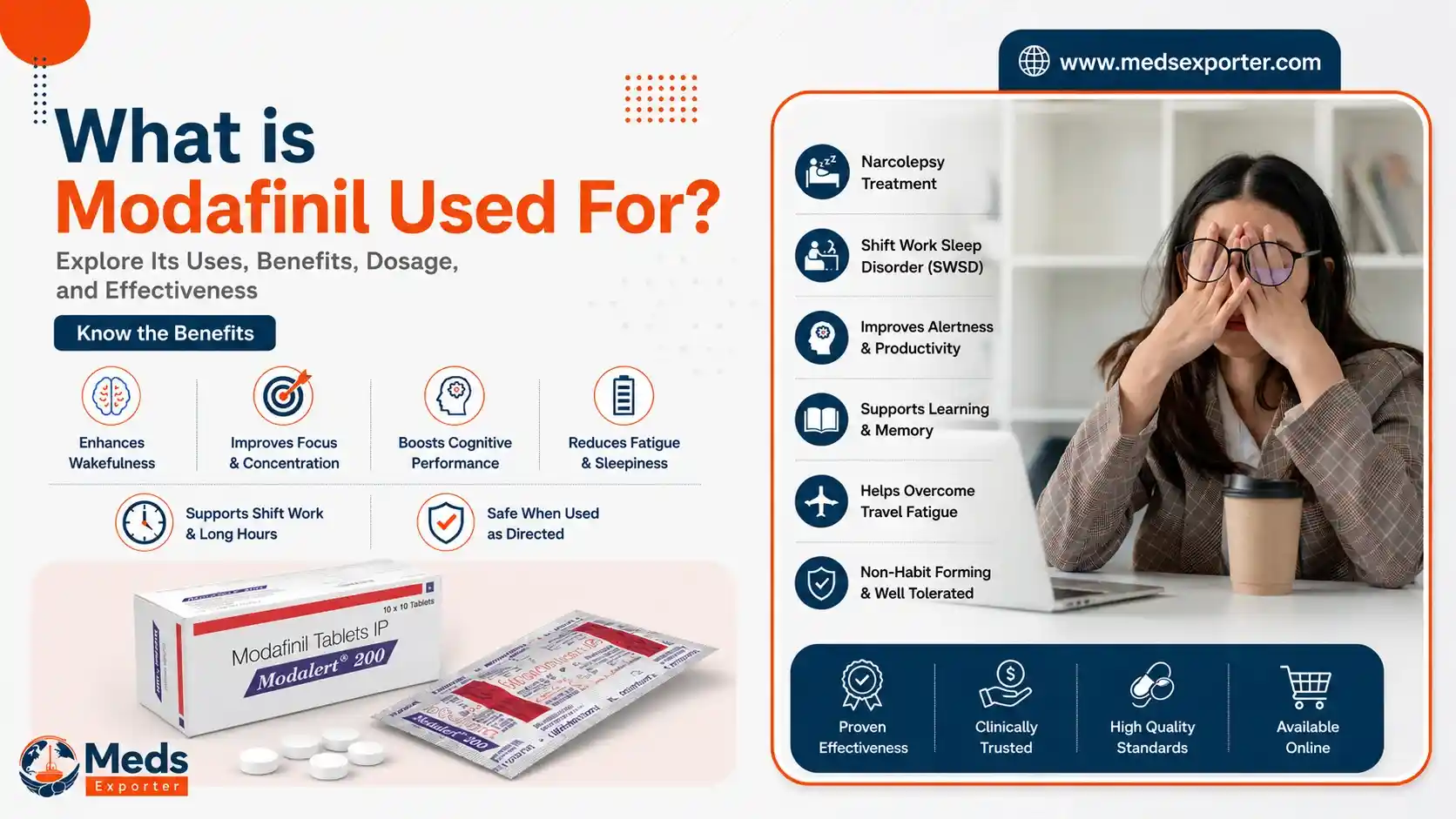
Modafinil is a prescription medication primarily known for its ability to promote wakefulness and improve cognitive function. Originally developed to treat sleep-related disorders, it has gained popularity for its diverse applications. This article explores the main modafinil uses, how it works, its benefits, and safety considerations.
What is Modafinil?
Modafinil is a central nervous system stimulant classified as a wakefulness-promoting agent. It was approved by the FDA in the late 1990s for the treatment of excessive sleepiness caused by narcolepsy, shift work sleep disorder, and obstructive sleep apnea. Its ability to enhance focus and alertness has also made it popular off-label as a cognitive enhancer.
Primary Medical Uses of Modafinil
1. Narcolepsy
Narcolepsy is a chronic sleep disorder characterized by excessive daytime sleepiness and sudden sleep attacks. Modafinil helps individuals with narcolepsy stay awake during the day, improving their quality of life and ability to perform daily tasks.
2. Obstructive Sleep Apnea (OSA)
OSA is a condition where breathing repeatedly stops and starts during sleep, causing tiredness and sleepiness during the day. It is prescribed to treat residual sleepiness in people using CPAP machines or other treatments, allowing them to stay alert throughout the day.
3. Shift Work Sleep Disorder (SWSD)
Shift work sleep disorder affects individuals who work non-traditional hours, resulting in misaligned circadian rhythms and daytime drowsiness. Modafinil helps by promoting alertness during work hours and enhancing performance.
Off-Label Uses of Modafinil
Aside from its FDA-approved uses, modafinil is widely used off-label for several reasons, particularly for cognitive enhancement and mental fatigue reduction.
1. Cognitive Enhancement
Many users take modafinil to boost concentration, memory, and reasoning abilities. Studies suggest that it can increase mental alertness, improve the ability to process information, and reduce fatigue, especially during extended wakefulness.
2. Attention Deficit Hyperactivity Disorder (ADHD)
Although not officially approved for ADHD treatment, some clinicians prescribe modafinil as an alternative to traditional stimulants. It can help improve focus and decrease impulsivity without the same potential for dependency.
3. Depression and Fatigue Management
It has been used as an adjunct medication to reduce fatigue and improve mood in patients with depression or multiple sclerosis. It helps combat the cognitive and physical fatigue often seen in these conditions.
4. Enhancing Productivity in Healthy Individuals
Modafinil’s ability to sustain attention and delay sleepiness has made it a popular choice among professionals, students, and individuals needing to boost productivity for extended periods.
How Does Modafinil Work?
Modafinil’s exact mechanism is not fully understood, but it influences several neurotransmitters in the brain, including dopamine, norepinephrine, and histamine. By increasing wakefulness-related chemicals and enhancing neural pathways involved in cognition and alertness, it helps improve focus and alertness without the jittery effects typical of other stimulants.
Potential Benefits of Modafinil
- Increased Wakefulness: Helps reduce excessive sleepiness and improves alertness.
- Enhanced Cognitive Function: Supports better memory, attention, and executive function.
- Improved Mood: May alleviate fatigue and depressive symptoms in some cases.
- Fewer Side Effects: Compared to traditional stimulants, it generally has a lower risk of addiction and cardiovascular side effects.
Read More:- Modafinil Benefits and Dosage
Possible Side Effects and Precautions
While modafinil is generally well-tolerated, it may cause side effects in some individuals. Common side effects include headaches, nausea, dizziness, and insomnia. Serious but rare risks include allergic reactions and psychiatric symptoms like anxiety or hallucinations.
It is essential to consult a healthcare professional before using it, especially if you have underlying conditions such as heart problems, liver issues, or a history of mental illness. Additionally, pregnant or breastfeeding women should avoid modafinil due to limited safety data.
Summary of Modafinil Uses
- Treatment of narcolepsy
- Managing excessive sleepiness in obstructive sleep apnea
- Improving alertness in shift work sleep disorder
- Off-label use for cognitive enhancement and productivity
- Potential treatment adjunct for ADHD and depression-related fatigue
FAQs
Is modafinil safe for long-term use?
Long-term safety data is limited, but when prescribed by a healthcare provider and used as directed, modafinil is generally considered safe. Regular medical supervision is recommended.
Can I use modafinil without a prescription?
It is a prescription medication in most countries. Using it without medical supervision is not recommended and may be illegal.
Does modafinil cause addiction?
It has a lower potential for addiction compared to traditional stimulants, but dependency is still possible, especially if misused.
How quickly does modafinil take effect?
Modafinil typically begins to work within 30 to 60 minutes after ingestion, with peak effects occurring around 2 to 4 hours.
Can modafinil be used to treat jet lag?
While not officially approved for jet lag, some people use modafinil off-label to reduce sleepiness and improve alertness after crossing time zones.