
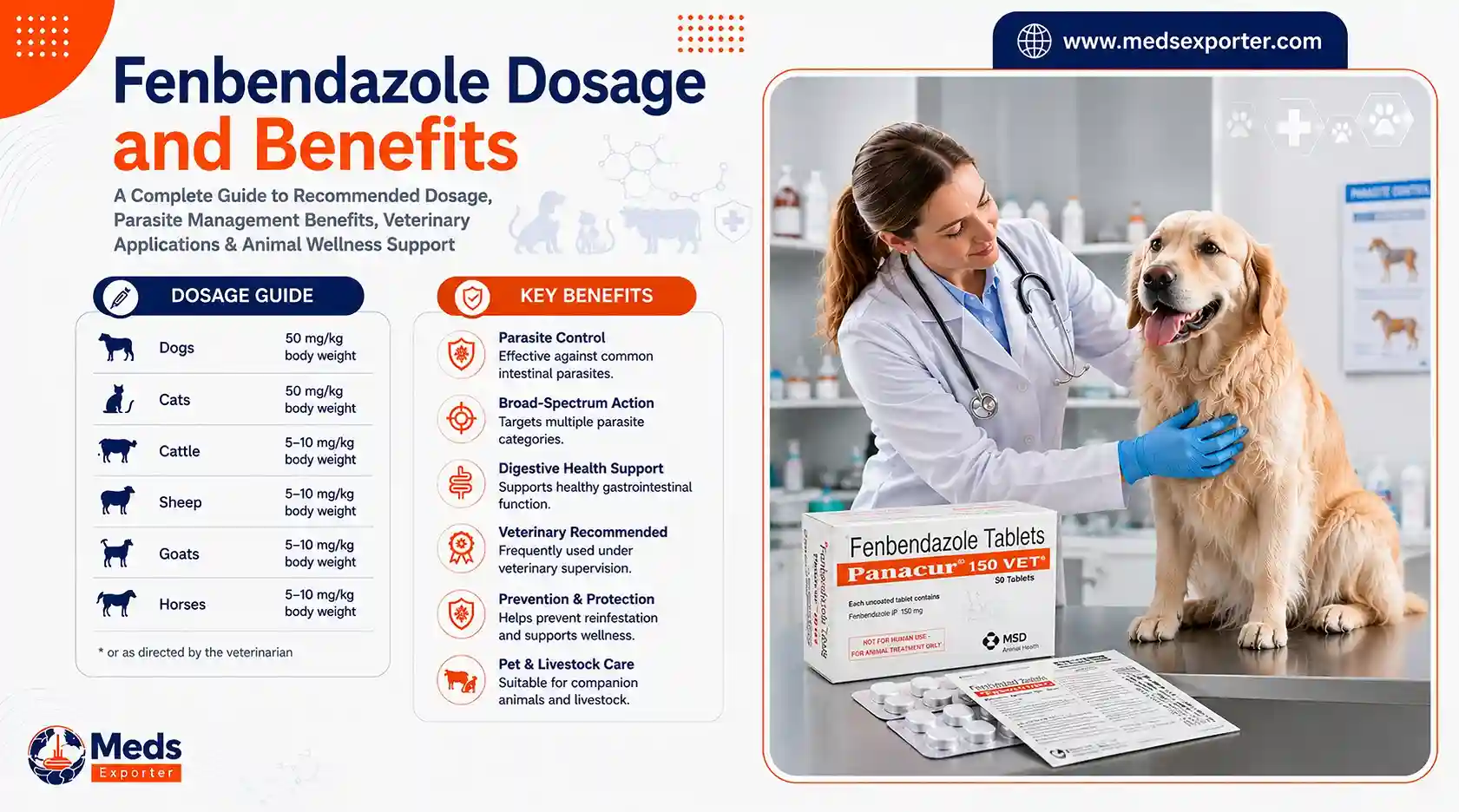
Fenbendazole is a widely used antiparasitic medication that belongs to the benzimidazole class of drugs. It is commonly administered to animals for controlling various intestinal parasites, including roundworms, hookworms, whipworms, and certain types of tapeworms. Known for its broad-spectrum efficacy and safety profile, fenbendazole is an essential tool in veterinary medicine.
Understanding the correct fenbendazole dosage is crucial to ensure the optimal treatment of parasitic infections while minimizing any potential side effects. This article provides a detailed overview of fenbendazole dosage guidelines and highlights the various benefits associated with its use.
What Is Fenbendazole?
Fenbendazole works by disrupting the metabolism of parasites, leading to their inability to absorb glucose, which ultimately kills them. It is administered orally and is effective against a wide range of gastrointestinal parasites. Besides its veterinary applications, fenbendazole has gained attention for potential off-label uses, though such uses should be approached with caution and under professional guidance.
Fenbendazole Dosage Guidelines
Dosing fenbendazole properly depends on the species being treated, the type of parasite infection, and the formulation of the medication. Below are common dosage recommendations for animals:
Dogs
Fenbendazole for Dogs is typically given at a dose of 50 mg/kg body weight once daily for 3 to 5 consecutive days. This regimen effectively treats roundworms, hookworms, whipworms, and some tapeworm infections.
Cats
Cats usually receive a dose of 50 mg/kg body weight per day for 3 to 5 days. The dose may be repeated depending on the severity of the infection and the veterinarian’s advice.
Horses
Fenbendazole dosage for horses is commonly 7.5 mg/kg body weight once daily for 5 days. It is used mainly to control large and small strongyles, roundworms, and certain tapeworms.
Livestock (Cattle, Sheep, Goats)
For livestock, the recommended dosage is 5 mg/kg body weight, often administered once daily for 3 to 5 days. This helps control gastrointestinal nematodes effectively.
General Guidelines
- Always weigh the animal accurately to calculate the correct dose.
- Administer the full course to ensure complete parasite eradication.
- Fenbendazole can be given with or without food, but giving it with food may improve uptake.
- Consult a veterinarian before starting treatment to confirm the diagnosis and dosing.
Benefits of Fenbendazole
Fenbendazole offers multiple benefits, making it a preferred antiparasitic agent in various animal species. The key benefits include the following:
- Broad-Spectrum Efficacy: Effective against a wide variety of intestinal parasites, including nematodes and some cestodes.
- Safety: Generally well-tolerated with a wide safety margin, even at doses higher than recommended.
- Minimal Resistance Issues: Compared with other anthelmintics, fenbendazole tends to have lower rates of resistance development in parasites.
- Easy Administration: Available in various forms such as granules, suspensions, and tablets, facilitating easy dosing.
- Supports Animal Health: Reduces parasite burden, improving nutrient absorption, promoting weight gain, and enhancing overall well-being.
Side Effects and Precautions
Although fenbendazole is generally safe, some animals may experience mild side effects like vomiting, diarrhea, or reduced appetite. These issues are usually transient and dose-dependent.
Important precautions include:
- Do not exceed the prescribed dose without veterinary consultation.
- Avoid using fenbendazole in animals with known hypersensitivity to benzimidazoles.
- Pregnant or lactating animals should be treated cautiously, with veterinary advice.
- Observe withdrawal periods for food-producing animals to avoid drug residues in meat or milk.
Conclusion
Fenbendazole is a versatile and effective antiparasitic medication widely used to treat gastrointestinal parasites in various animal species. Correct fenbendazole dosage is vital to achieve the best results and minimize any adverse effects. Consulting a veterinarian for diagnosis and dosing recommendations is essential for safe and effective treatment.
FAQs
What is the typical fenbendazole dosage for dogs?
The standard dosage for dogs is 50 mg/kg of body weight once daily for 3 to 5 days to eliminate common intestinal parasites.
Can fenbendazole be given to pregnant animals?
Fenbendazole should be administered to pregnant animals only under veterinary supervision, as safety depends on the species and stage of pregnancy.
Is fenbendazole safe for all animals?
While fenbendazole is generally safe, it may not be suitable for all animals. Always consult a veterinarian before use, especially for very young, old, sick, or pregnant animals.
Can fenbendazole be used to treat parasites in humans?
Fenbendazole is primarily approved for veterinary use. Human use is off-label and should only be considered under strict medical supervision.
How long does it take for fenbendazole to work?
Fenbendazole typically begins killing parasites within 24 hours of administration, but the full treatment course usually lasts 3 to 5 days for effective eradication.