
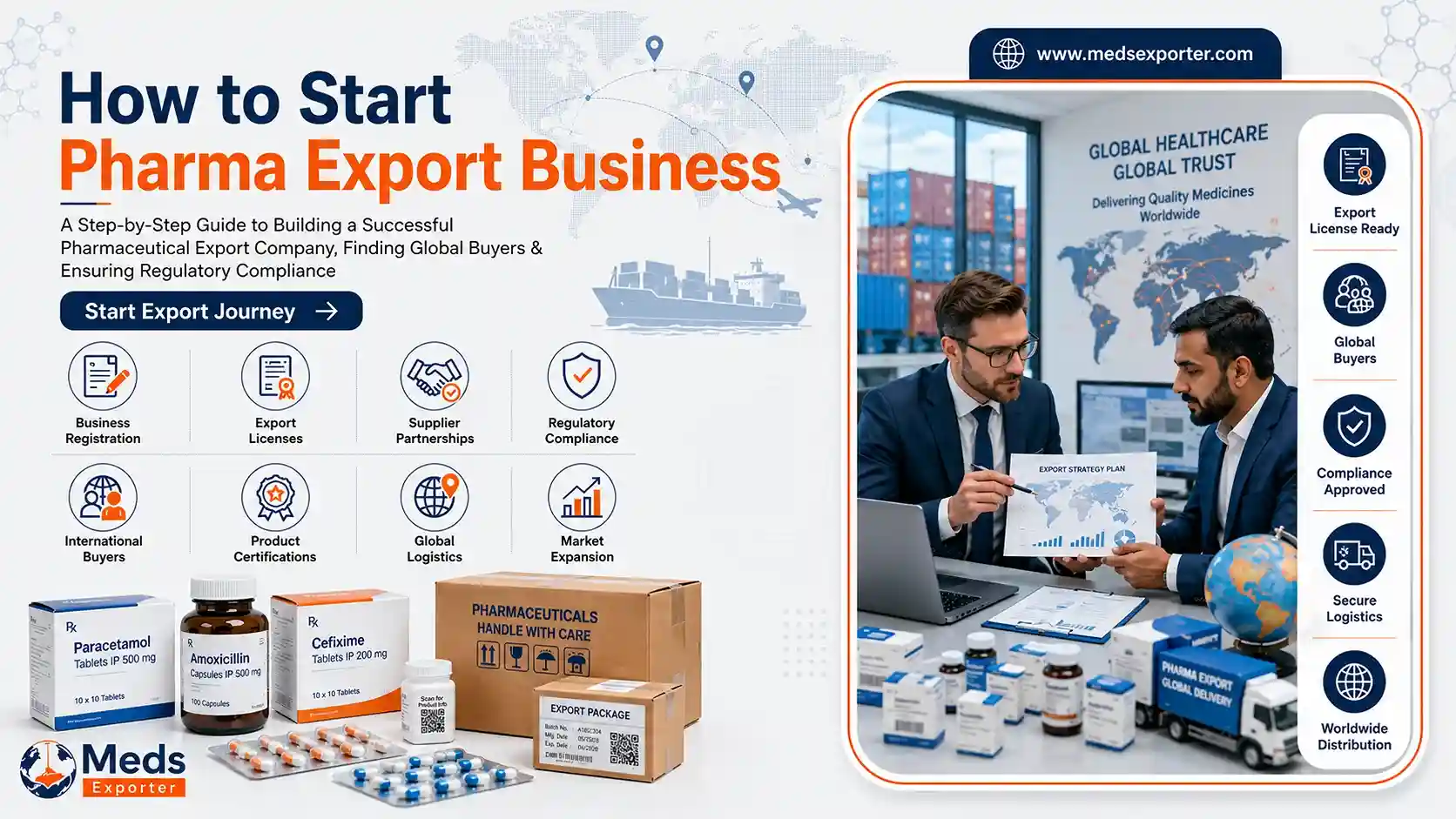
The pharma export business is a lucrative and growing sector due to the increasing global demand for quality medicines and healthcare products. Starting a pharma export business requires careful planning, an understanding of legal and regulatory requirements, and a clear strategy to enter international markets. This guide will walk you through essential steps to establish and grow your pharma export business effectively.
Understanding the Pharma Export Business
Pharma export business involves supplying pharmaceutical products like medicines, drugs, active pharmaceutical ingredients (APIs), medical devices, and health supplements to foreign countries. It is regulated by both the country of origin and the destination country to ensure product safety, quality, and compliance with international standards.
Key Steps to Start Pharma Export Business
1. Conduct Market Research
Before starting, analyze potential export markets to identify demand trends, competition, regulatory requirements, and customer preferences. Consider factors such as:
- Target countries with high demand for pharma products
- Key competitors and their offerings
- Regulatory environment and import restrictions
- Pricing and payment terms in target markets
2. Choose the Products to Export
Decide the range of pharmaceutical products you want to export based on market research and your manufacturing capabilities. Common export products include:
- Generic medicines
- Branded drugs
- Over-the-counter (OTC) products
- Active Pharmaceutical Ingredients (APIs)
- Medical devices
3. Obtain Required Licenses and Certifications
Compliance with legal and regulatory frameworks is critical in pharma exports. Important licenses and certifications include:
- Drug License: Issued by the local drug control authority to manufacture or sell pharmaceutical products.
- Export License: Required to export pharmaceuticals, usually issued by the Director General of Foreign Trade (DGFT) or relevant government bodies.
- Good Manufacturing Practices (GMP) Certification: Ensures manufacturing meets international quality standards.
- Product Registration: Some countries require pharma products to be registered before import.
4. Set up Supply Chain and Logistics
Efficient supply chain and logistics management are essential for timely delivery and product integrity. Consider:
- Choosing reliable transportation partners specialized in pharma products
- Maintaining cold chain logistics, if needed
- Packaging solutions that comply with international standards
- Inventory management systems to track shipments
5. Prepare Proper Documentation
Pharma exports require comprehensive documentation for customs clearance and regulatory compliance. Essential documents include:
- Commercial Invoice
- Packing List
- Certificate of Origin
- Quality and Test Certificates
- Bill of Lading or Air Waybill
- Export License copies
6. Find Buyers and Establish Relationships
Building a strong client base is crucial for sustainable growth. You can find buyers through:
- International trade fairs and pharma exhibitions
- B2B marketplaces and export promotion councils
- Pharma buying agents and distributors
- Digital marketing and SEO-optimized websites
7. Comply with International Regulations
Ensure your products meet the standards set by the importing countries, such as the FDA (USA), EMA (Europe), or other national regulatory authorities. This will help avoid shipment rejections, recalls, and legal penalties.
Tips for Successful Pharma Export Business
- Stay updated with global pharma market trends and regulations.
- Develop a thorough quality assurance system to maintain product standards.
- Invest in technology to improve supply chain efficiency and customer management.
- Build strong networks with freight forwarders, customs brokers, and agents.
- Offer competitive pricing without compromising on quality.
Conclusion
Starting a pharma export business requires diligent preparation, compliance with legal requirements, and effective market strategies. By conducting thorough market research, obtaining all necessary licenses, ensuring product quality, and building strong buyer relationships, you can successfully tap into the growing global pharmaceutical market.
FAQs
What licenses are required to start a pharma export business?
You need a valid drug license, an export license issued by the government export authority, and quality certifications like GMP. Additionally, product registration may be required in the importing country.
How can I find buyers for my pharma export business?
Buyers can be found through pharma trade fairs, B2B platforms, export promotion councils, and digital marketing efforts. Networking with agents and distributors is also effective.
What are the key challenges in pharma export?
Challenges include complying with stringent international regulations, maintaining product quality, managing cold chain logistics, and navigating complex documentation processes.
Is it necessary to have GMP certification?
Yes, GMP certification assures international buyers of your manufacturing standards and is often mandatory for exporting pharmaceutical products.
Can small pharma companies export medicines?
Yes, small companies can export if they meet regulatory requirements, hold the necessary licenses, and maintain high product quality.