
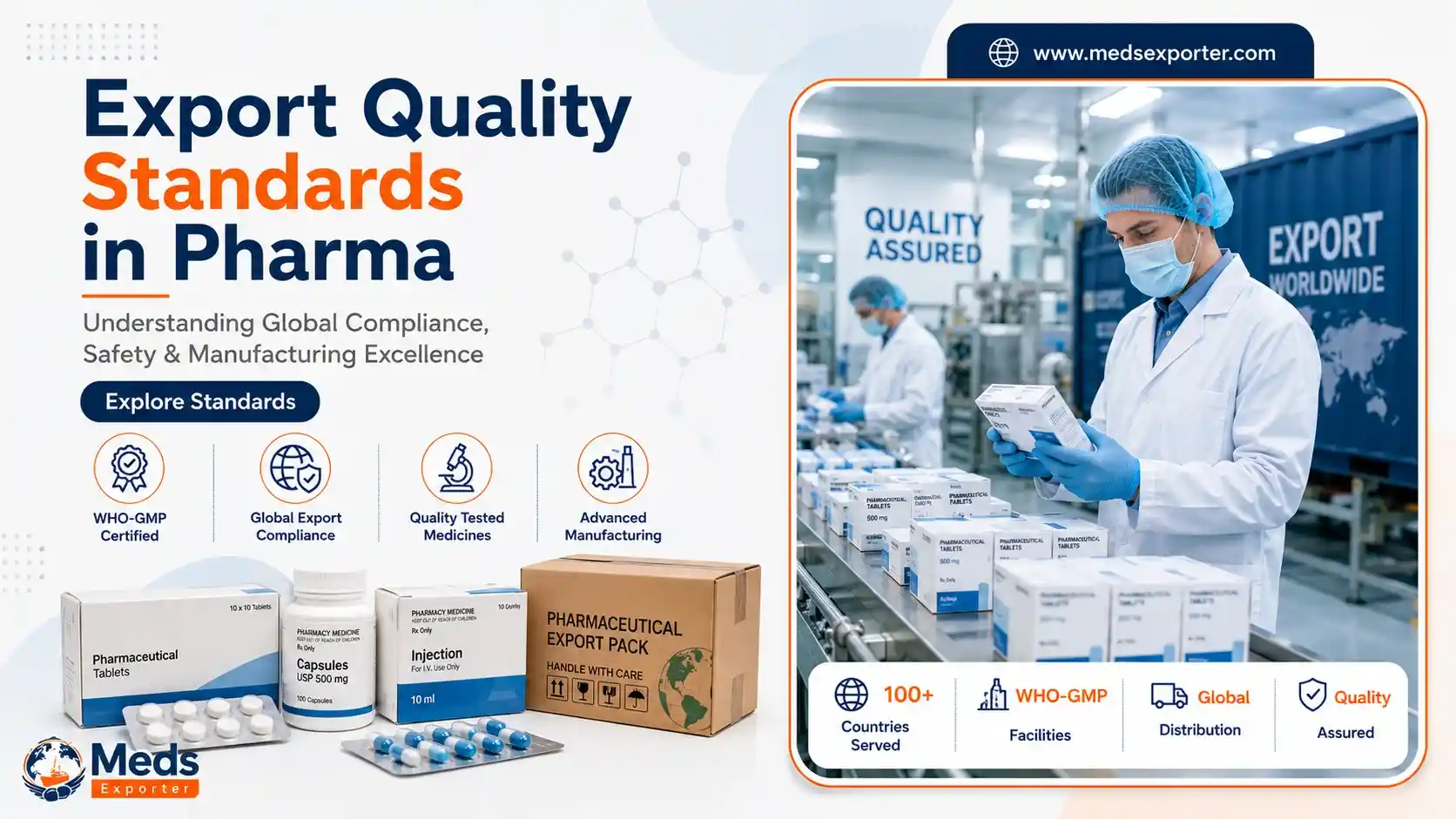
In the competitive pharmaceutical industry, maintaining stringent pharma quality standards is crucial, especially for companies aiming to export their products internationally. Export quality standards ensure that pharmaceutical products are safe, effective, and of the highest quality, meeting the regulatory requirements of the target markets. This blog post explores the critical criteria, guidelines, and certifications related to export quality standards in the pharma sector.
Understanding Pharma Quality Standards
Pharma quality standards refer to a set of specifications, procedures, and guidelines that govern the manufacturing, testing, packaging, and distribution of pharmaceutical products. These standards are designed to maintain product safety, efficacy, and consistency, ultimately protecting public health.
Why Are Export Quality Standards Important?
- Regulatory Compliance: Each country enforces its own guidelines to ensure exported medicines meet local safety and quality requirements.
- Market Access: Adhering to international quality standards facilitates smoother market entry and acceptance.
- Patient Safety: Compliant quality standards minimize risks associated with substandard or counterfeit medicines.
- Reputation: Meeting global standards builds trust and credibility among healthcare providers, regulators, and consumers.
Key Pharma Quality Standards for Export
The pharmaceutical industry follows several internationally recognized standards, guidelines, and frameworks to comply with export quality requirements. Here are the most important ones:
1. Good Manufacturing Practices (GMP)
GMP is a fundamental standard that ensures that pharmaceutical products are consistently produced and controlled according to quality standards. It covers all aspects of production from raw material sourcing, manufacturing processes, and packaging to documentation and personnel hygiene.
- Focuses on minimizing risks like contamination, mix-ups, and errors.
- Inspected and certified by national regulatory authorities.
- Complies with requirements specified by WHO, FDA, EMA, etc.
2. WHO Guidelines
The World Health Organization (WHO) provides comprehensive guidelines for pharmaceutical quality assurance that many developing countries adopt to regulate their pharmaceutical exports. These guidelines emphasize quality control, risk management, and validation procedures.
3. US FDA Standards
The Food and Drug Administration (FDA) of the United States sets rigorous standards for pharmaceutical exports. Companies must comply with FDA regulations for manufacturing practices, labeling, and clinical trial data to export to the US.
4. European Medicines Agency (EMA) Compliance
Pharma exporters to the European Union must comply with EMA requirements. QA processes under EMA govern drug development, authorization, and post-market surveillance to ensure safety standards.
Documentation and Certification Requirements
To meet export quality standards, thorough documentation is mandatory. The following documents are typically required:
- Certificate of Analysis (CoA): Confirms that each batch meets specified standards.
- Certificate of Pharmaceutical Product (CPP): Issued by the exporting country’s regulatory authority confirming compliance with safety and quality norms.
- Good Manufacturing Practice (GMP) Certificate: Validates the manufacturer’s compliance with GMP.
- Batch Manufacturing Records (BMR): Detailed records of the production process ensuring traceability.
- Stability Data: Demonstrates product shelf life and storage conditions.
Challenges in Meeting Export Quality Standards
Despite clear guidelines, pharma companies face several challenges in conforming to export quality standards:
- Diverse Regulatory Requirements: Different countries have varying regulations, which complicate compliance.
- High Cost of Compliance: Upgrading facilities, training staff, and testing products require significant investment.
- Counterfeit and Substandard Products: Combatting counterfeit drugs remains a major global challenge.
- Documentation and Traceability: Maintaining accurate and comprehensive records to satisfy multiple regulatory agencies.
Best Practices to Ensure Compliance
To effectively comply with export quality standards, pharma companies should adopt the following best practices:
- Implement Robust Quality Management Systems: Integrate quality processes throughout the production lifecycle.
- Regular Staff Training: Continuous education on GMP and regulatory updates.
- Periodic Internal Audits: Self-inspection to identify and rectify gaps before external audits.
- Invest in Advanced Technology: Use automation and computerized systems for precise process control.
- Collaborate with Regulatory Consultants: Engage experts to navigate complex global regulatory landscapes.
Conclusion
Export quality standards in pharma are essential to ensure that medicines reaching global markets are safe, effective, and meet high-quality benchmarks. Abiding by internationally accepted guidelines like GMP, WHO, FDA, and EMA standards can significantly enhance a pharmaceutical company’s reputation and open new market opportunities. Through diligent compliance, transparent documentation, and continuous quality improvement, pharma exporters can successfully compete on a global scale.
FAQs
What are pharma quality standards?
Pharma quality standards are a set of requirements and guidelines that ensure the safety, efficacy, and quality of pharmaceutical products throughout their lifecycle.
Why is GMP important for pharmaceutical exports?
GMP ensures that products are consistently produced and controlled to quality standards, minimizing risks during manufacturing and ensuring regulatory compliance for exports.
Which certifications are required for exporting pharma products?
Common certifications include Good Manufacturing Practice (GMP) Certificate, Certificate of Analysis (CoA), Certificate of Pharmaceutical Product (CPP), and product stability data documentation.
How do pharma companies handle diverse regulatory requirements for exports?
Companies work with regulatory consultants, maintain updated knowledge on global regulations, and customize their quality management systems to meet specific country requirements.
Can adopting pharma quality standards increase profitability?
Yes, adherence to international quality standards can enhance market access, build brand trust, and reduce rejection risks, ultimately improving profitability.